
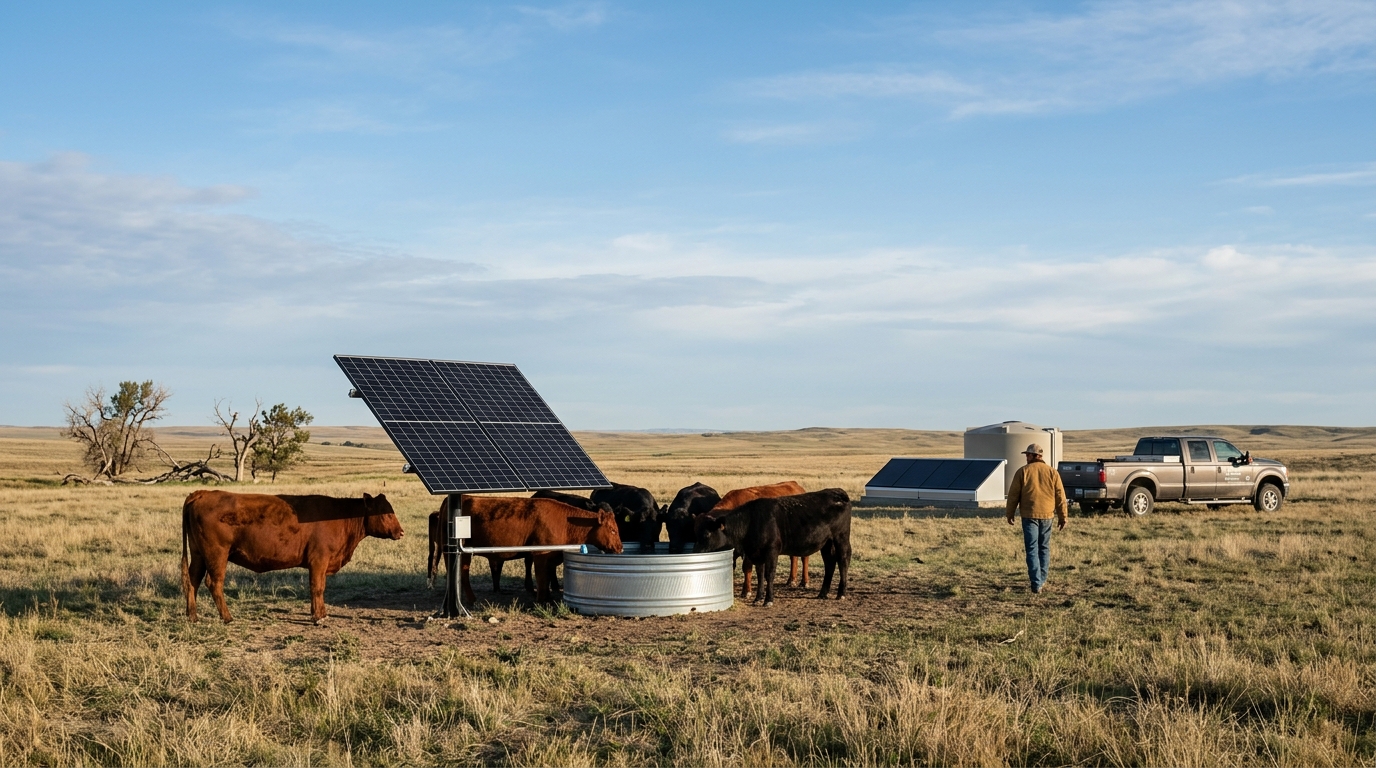
Cost of Solar-Powered Well Pumps and Livestock Watering in Wyoming
Livestock Watering Components
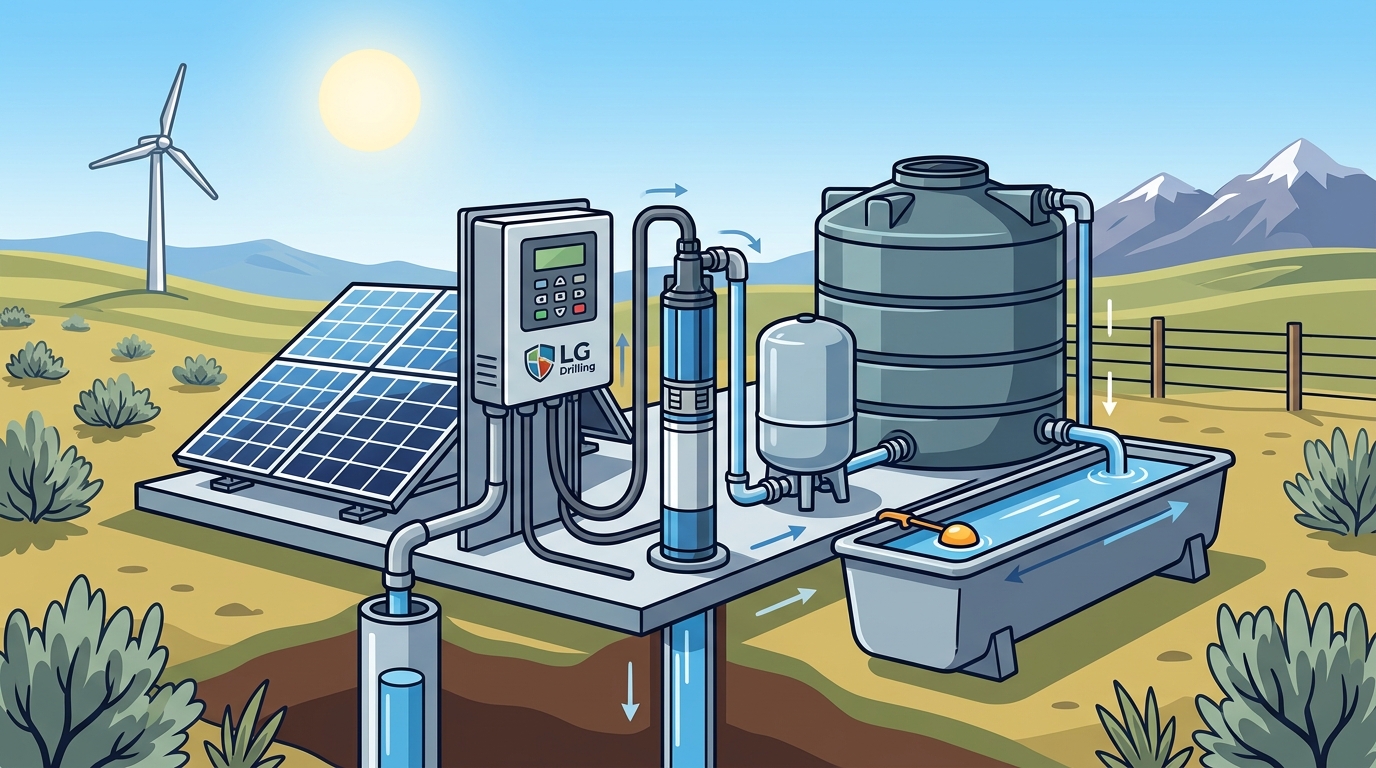
A complete livestock watering system is a turnkey solution that delivers water from a well to remote pastures or corrals. The system integrates several critical hardware elements that must work in harmony to ensure consistent water flow. Understanding these components is the first step in estimating your total installation cost.
Submersible Pumps and Motors
The submersible pump is the heart of the system, lowering into the well to lift water to the surface. In Wyoming, where water tables can be deep, you may need a pump rated for high lift and continuous operation. The motor size must match the specific hydraulic demands of your well to prevent burnout. For additional details, review the About Us LG Drilling.
Storage Tanks and Cisterns
Storage tanks and cisterns are essential for buffering water supply during periods of low solar production or high demand. These vessels can range from small polyethylene tanks to large steel cisterns. Proper sizing ensures that livestock have access to water even if the pump is temporarily offline.
Piping and Distribution
Piping runs from the wellhead to the storage tanks and then to the watering troughs. In remote agricultural settings, this can involve miles of pipe. The choice between polyethylene and steel pipe affects both the initial cost and the long-term durability of the system against freezing and physical damage.
Solar Power Systems for Wells
Solar power systems for wells are a cost-effective solution in remote areas where electricity is not available or where the cost of extending power lines is prohibitive. By using solar panels to power a well pump, you can access water without incurring high ongoing utility costs. This makes it an ideal solution for off-grid locations in Southeast Wyoming.
Panel Arrays and Controllers
The solar array consists of photovoltaic panels that convert sunlight into electricity. A dedicated solar pump controller regulates the power flow to the pump, ensuring it operates efficiently at varying light levels. The size of the array is determined by the pump's power requirements and the local solar irradiance data.
Battery Backup Systems
Wyoming Permitting and Compliance
Drilling a new well in Wyoming requires strict adherence to state regulations. The State Engineer's Office oversees the permitting process to ensure sustainable water use. Navigating this process is a significant part of the overall project timeline and cost.
Permit Application and Fees
Statement of Completion
After the well is drilled, a Statement of Completion must be filed with the state. This document details the final construction of the well, including casing depth and pump installation. Filing this statement is mandatory and ensures your well is registered in the state's water records.
Detailed Cost Breakdown
Estimating the cost of a solar-powered well pump and livestock watering system requires looking at each phase of the project. The following table provides a general reference for the major cost categories involved in a typical Wyoming installation.
| Component | Estimated Cost Range | Notes |
|---|
The total project cost is the sum of these individual components. It is important to note that these are estimates and actual costs can vary based on site-specific conditions. A professional assessment is necessary to provide an accurate quote for your specific property.
Maintenance and Longevity
Proper maintenance is crucial for the longevity of your solar well system. Regular inspections can prevent minor issues from becoming major failures. A well-maintained system can operate reliably for decades, providing a consistent water source for your livestock.
Routine Inspections
Visual inspections of the solar panels and pump controls should be performed regularly. Checking for debris on the panels and ensuring all connections are secure helps maintain optimal performance. Monitoring water pressure and flow rates can also indicate potential issues before they become critical.
Emergency Response
Even with a robust system, emergencies can occur. Having a reliable service provider on call is essential for quick response to any failures. Fast service times are critical in remote areas where a water outage can quickly become a crisis for livestock.
Key Takeaways
- Well depth and rock hardness are the primary factors influencing drilling costs.
- Solar power eliminates ongoing electricity bills, making it ideal for remote properties.
- Wyoming requires a drilling permit and a Statement of Completion for all new wells.
- Storage tanks are essential for buffering water supply during low solar production.
- Professional installation ensures proper sizing and compliance with state regulations.
- Regular maintenance and emergency service plans are vital for long-term system reliability.
- Turnkey systems from experienced providers simplify the process from drilling to final installation.
Frequently Asked Questions
How deep do wells typically need to be in Wyoming?
Well depths in Wyoming vary significantly by location, but many agricultural wells are drilled between 100 and 500 feet. Deeper wells may be required in areas with lower water tables or harder rock formations.
Can a solar pump run continuously?
Yes, solar pumps can run continuously during daylight hours. The controller manages the power flow to ensure the pump operates efficiently without overheating or drawing too much current.
What happens if it is cloudy for several days?
Storage tanks provide a buffer of water that can last for several days. If the system includes battery backup, the pump can continue to operate during extended cloudy periods.
Do I need a permit to drill a well in Wyoming?
Yes, a permit from the Wyoming State Engineer's Office is required for all new wells. The permit application must be approved before drilling begins.
How long does installation take?
Installation time depends on the complexity of the project. Drilling a well can take several days to a week, while installing the solar system and piping may take an additional few days.
Is financing available for well systems?
Many providers offer financing options to help spread the cost of the installation over time. This can make it easier to budget for a large upfront investment.
Conclusion
Investing in a solar-powered well pump and livestock watering system is a strategic decision for ranchers and landowners in Wyoming. It provides a reliable, off-grid water source that can sustain livestock operations in remote areas. By understanding the components, permitting requirements, and cost factors, you can make an informed decision about your water infrastructure.
LG Drilling, LLC has extensive experience providing water to range livestock in Laramie, Albany, Goshen, and Platte counties. Our team can handle the entire process, from drilling the well to installing solar-powered pumps and storage tanks. We can also apply for your permit and file your Statement of Completion, ensuring full compliance with state regulations. To discuss your project and get a detailed quote, today.