
Cost of Solar-Powered Well Pumps and Livestock Watering Systems in Wyoming
Livestock Watering Components
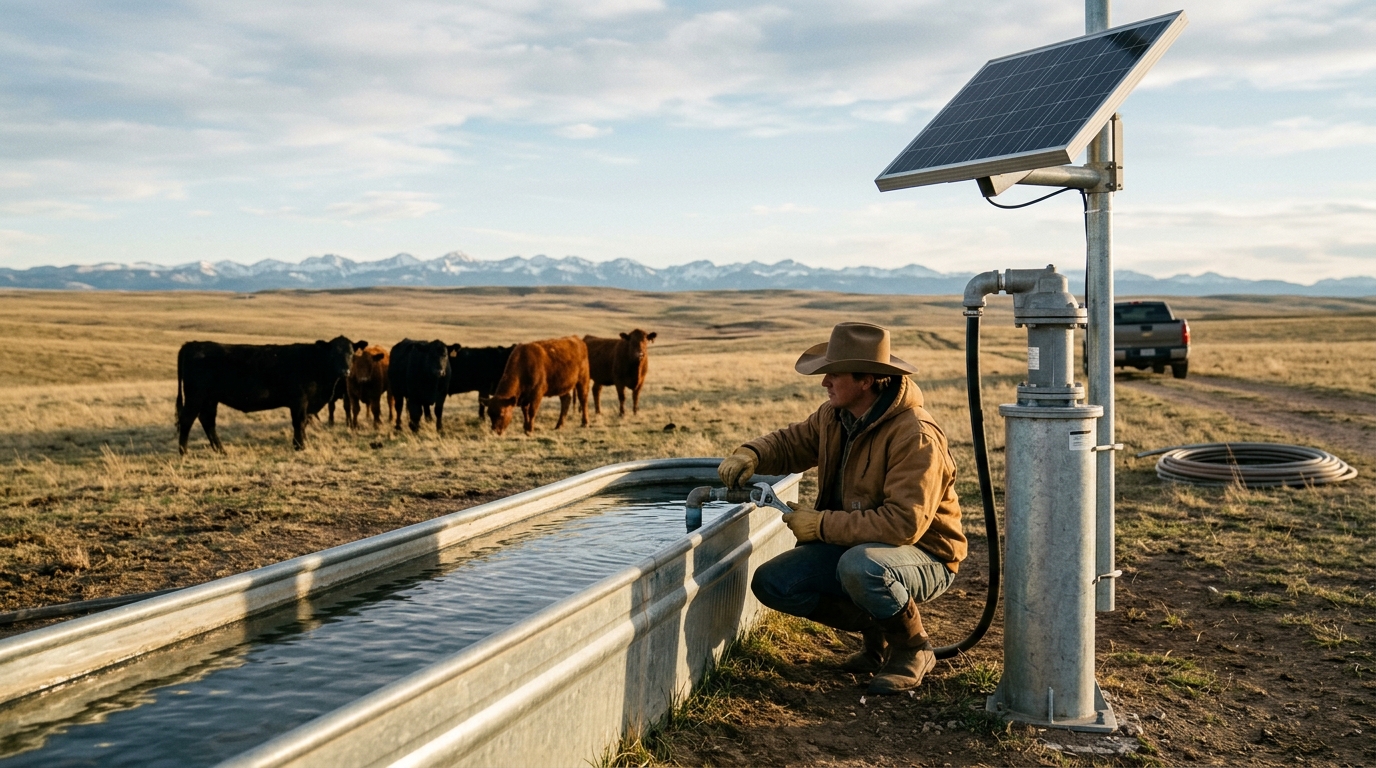
A livestock watering system is a complete infrastructure setup that delivers water to animals in remote pastures. In Wyoming, these systems must withstand extreme cold, high winds, and heavy snow loads. The core components include a water source, a pumping mechanism, a distribution line, and a storage or delivery point.
Water Source Options
Most ranches rely on a dedicated livestock well. Some use existing domestic wells with a separate branch line. The water source determines the pump size and solar array requirements. Deeper wells require more powerful pumps, which in turn need larger solar arrays.
Distribution and Delivery
Water is typically delivered via buried polyethylene pipe to a trough, tank, or automatic waterer. In freezing conditions, heated troughs or buried lines with heat tape are essential. The distance from the well to the watering point significantly impacts pipe costs and pressure requirements.
Solar Power Systems for Remote Wells
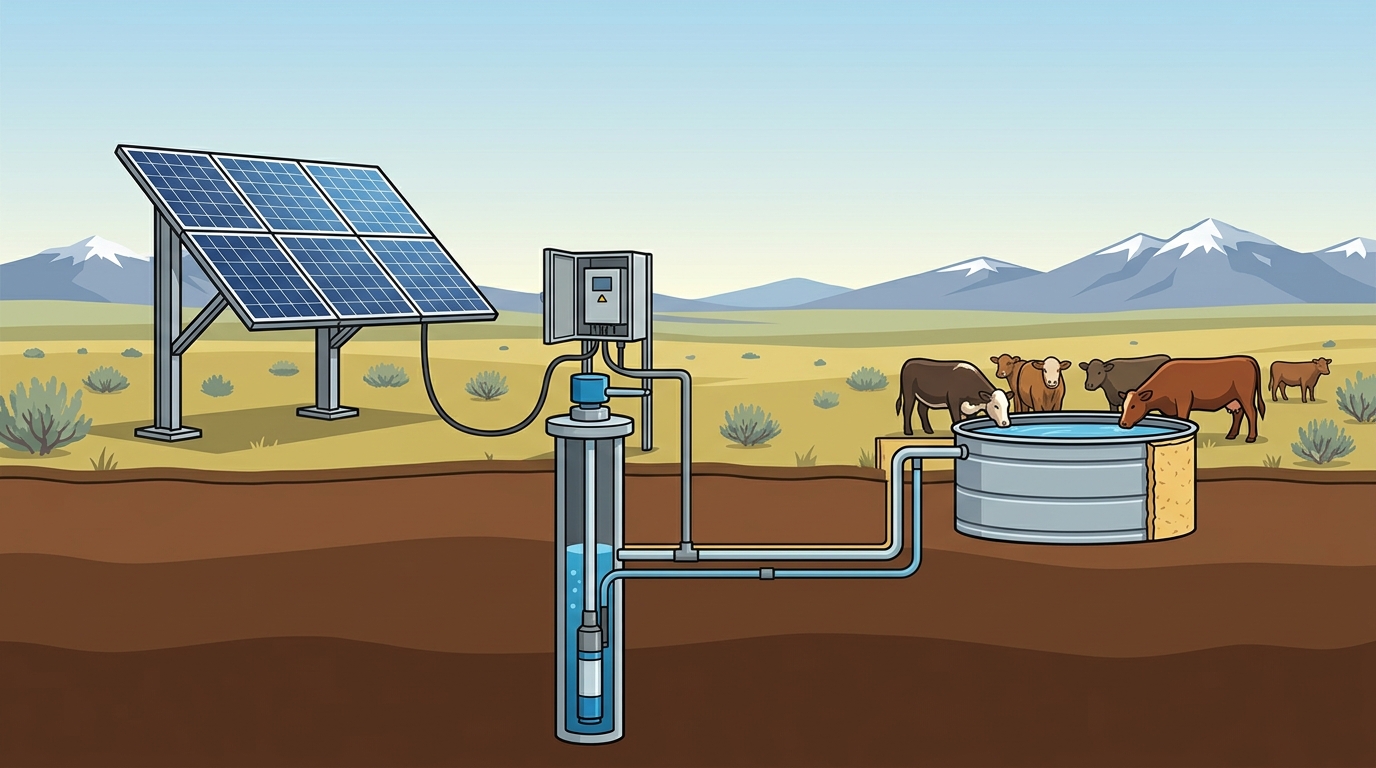
A solar-powered well pump is a system that uses photovoltaic panels to generate electricity for pumping water. This eliminates the need for grid power or diesel generators. In remote Wyoming locations, solar is often the most cost-effective long-term solution.
Solar Array Sizing
The size of the solar array depends on the pump's wattage and the desired gallons per day. A small submersible pump for a few head of cattle might require a 1,000-watt array. A larger system for a full herd might need 5,000 watts or more. Wyoming's high solar irradiance makes it an ideal location for these systems.
Battery and Controller Requirements
Many solar well pump systems use variable frequency drives (VFDs) that operate directly on solar power without batteries. This reduces cost and maintenance. For systems that need to run at night or during cloudy days, battery banks are added. Battery banks increase the initial cost but provide reliability.
Well Drilling and Permitting Costs
Permitting and Compliance
Wyoming requires a permit from the State Engineer before drilling a new well. The permit fee is modest, but the process requires a hydrogeological assessment. LG Drilling handles all State Engineer permitting and statements of completion for clients. This saves time and ensures compliance with state regulations.
Geological Considerations
Pump Selection and Water Storage
The pump is the heart of the system. Submersible pumps are the most common choice for deep wells. They are efficient, quiet, and durable. Above-ground pumps are used for shallow wells or surface water sources. The pump must be sized to meet peak demand, not just average use.
Storage Tanks and Cisterns
Storage tanks buffer water supply during periods of low solar generation. A 500-gallon tank is sufficient for a small herd. Larger operations may need 2,000 to 5,000 gallons. Tanks can be above-ground or buried. Buried tanks require excavation but are protected from freezing and UV damage.
Pressure and Controls
Pressure tanks and switches maintain consistent water pressure. For livestock watering, a simple float valve in a tank may suffice. For more complex systems, a pressure tank and switch provide automatic operation. LG Drilling specializes in constant pressure systems that keep water flow steady without fluctuation.
Installation Labor and Site Prep
Labor costs account for 30% to 50% of the total project cost. This includes drilling, trenching, electrical work, and system commissioning. Site preparation involves clearing vegetation, leveling the ground for equipment, and ensuring access for heavy machinery. In remote locations, site prep can be more expensive due to limited access.
Electrical and Plumbing Work
Electrical work includes installing the solar array, inverter or VFD, and wiring. Plumbing work includes laying pipe, installing the wellhead, and connecting the system. All work must meet local codes and standards. Professional installation ensures safety and longevity.
Timeline and Seasonality
Installation is typically done in spring or fall. Winter work is possible but more challenging due to frozen ground and weather delays. Planning ahead allows for proper scheduling and avoids rush fees. LG Drilling operates year-round and can accommodate seasonal constraints.
Maintenance and Long-Term Savings
Solar well pump systems have low maintenance requirements. The solar panels themselves last 25 to 30 years with minimal care. The pump may need servicing every 5 to 10 years. Regular inspections can prevent costly failures. LG Drilling offers 24/7 emergency service and routine maintenance for all well system components.
Cost Comparison: Solar vs. Grid
Financing and Incentives
Key Takeaways
- Solar arrays for small systems start at 1,000 watts; larger systems need 5,000 watts or more.
- Storage tanks of 500 to 5,000 gallons provide buffer during low solar generation.
- Labor and site prep account for 30% to 50% of the total project cost.
- Solar systems have a payback period of 5 to 8 years compared to grid power.
- Professional installation ensures compliance with state regulations and local codes.
- Regular maintenance and 24/7 emergency service extend system life and prevent failures.
Frequently Asked Questions
How deep does a livestock well need to be in Wyoming?
Well depth varies by location. In Southeast Wyoming, typical depths range from 200 to 500 feet. A hydrogeological assessment determines the exact depth needed for a reliable water source.
Can a solar well pump run at night?
How much water does a cow need per day?
A cow drinks 10 to 15 gallons per day. In hot weather, this can increase to 20 gallons. The system must be sized to meet peak demand, not just average use.
Do I need a permit to drill a well in Wyoming?
Yes, the Wyoming State Engineer requires a permit for all new wells. LG Drilling handles the entire permitting process, including the Statement of Completion.
How long does installation take?
A typical project takes 1 to 3 weeks, depending on complexity and weather. Drilling may take 2 to 5 days. System installation and commissioning take an additional 3 to 7 days.
What is the lifespan of a solar well pump system?
Solar panels last 25 to 30 years. Pumps last 10 to 15 years with proper maintenance. The overall system can last 20 to 30 years with regular servicing.
Can I use an existing well for livestock watering?
Yes, if the well has sufficient yield. A separate branch line can be installed to deliver water to the pasture. The existing pump may need to be upsized to handle the additional demand.
Is financing available for solar well pump systems?
Yes, LG Drilling offers financing options for clients. Green energy loans and agricultural credit programs may also be available. Contact LG Drilling to discuss financing details.
Conclusion
Investing in a solar-powered well pump and livestock watering system is a smart decision for Wyoming ranchers. The initial cost is offset by long-term savings on energy and maintenance. LG Drilling provides end-to-end service, from drilling and permitting to solar installation and 24/7 emergency support. To get a custom quote for your property, today.