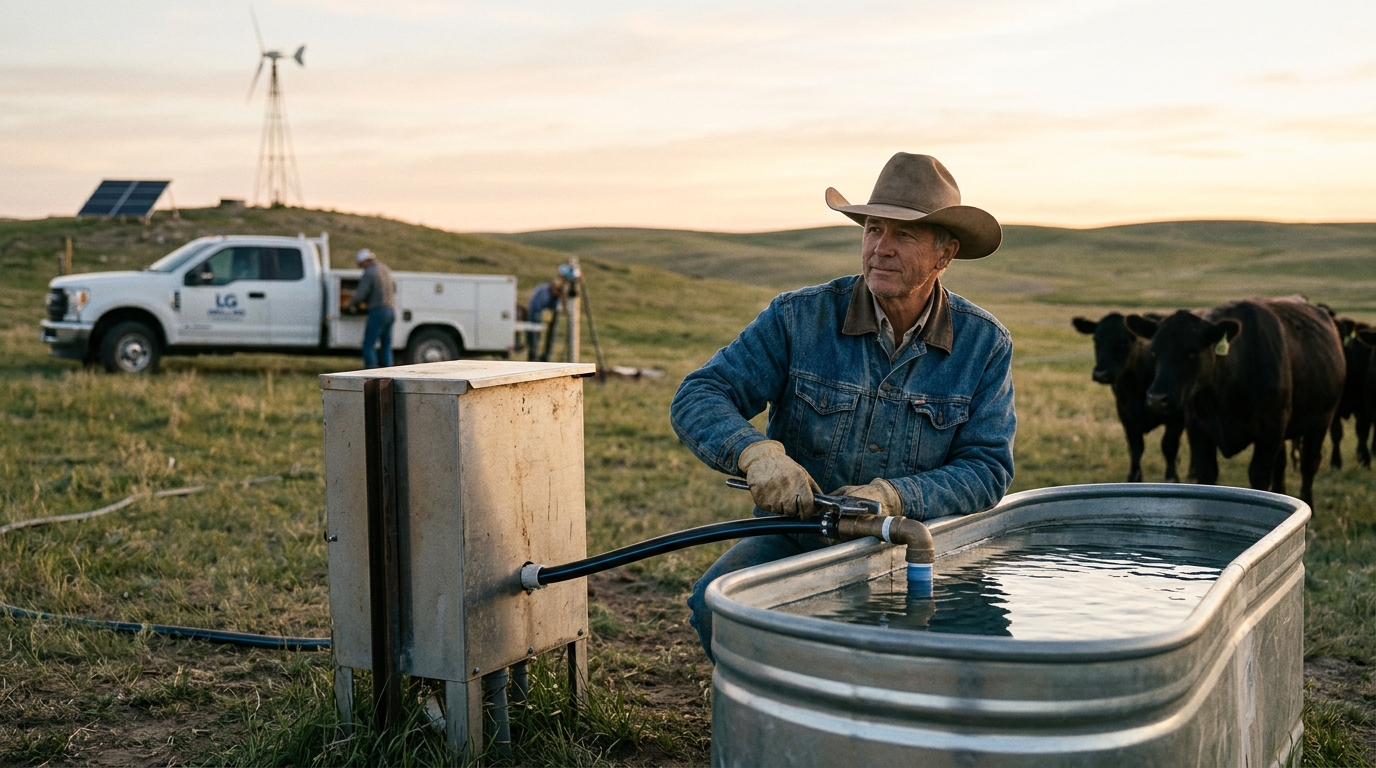
Planning a livestock watering system requires a clear understanding of the specific infrastructure needed to deliver reliable water to your animals. LG Drilling, LLC, based in Cheyenne, Wyoming, specializes in constructing turn-key agricultural water systems that handle everything from the initial drilling to the final control connections. Understanding the individual parts of this ecosystem helps you create a realistic budget and avoid unexpected costs during installation.
1. The Water Well and Drilling Rig
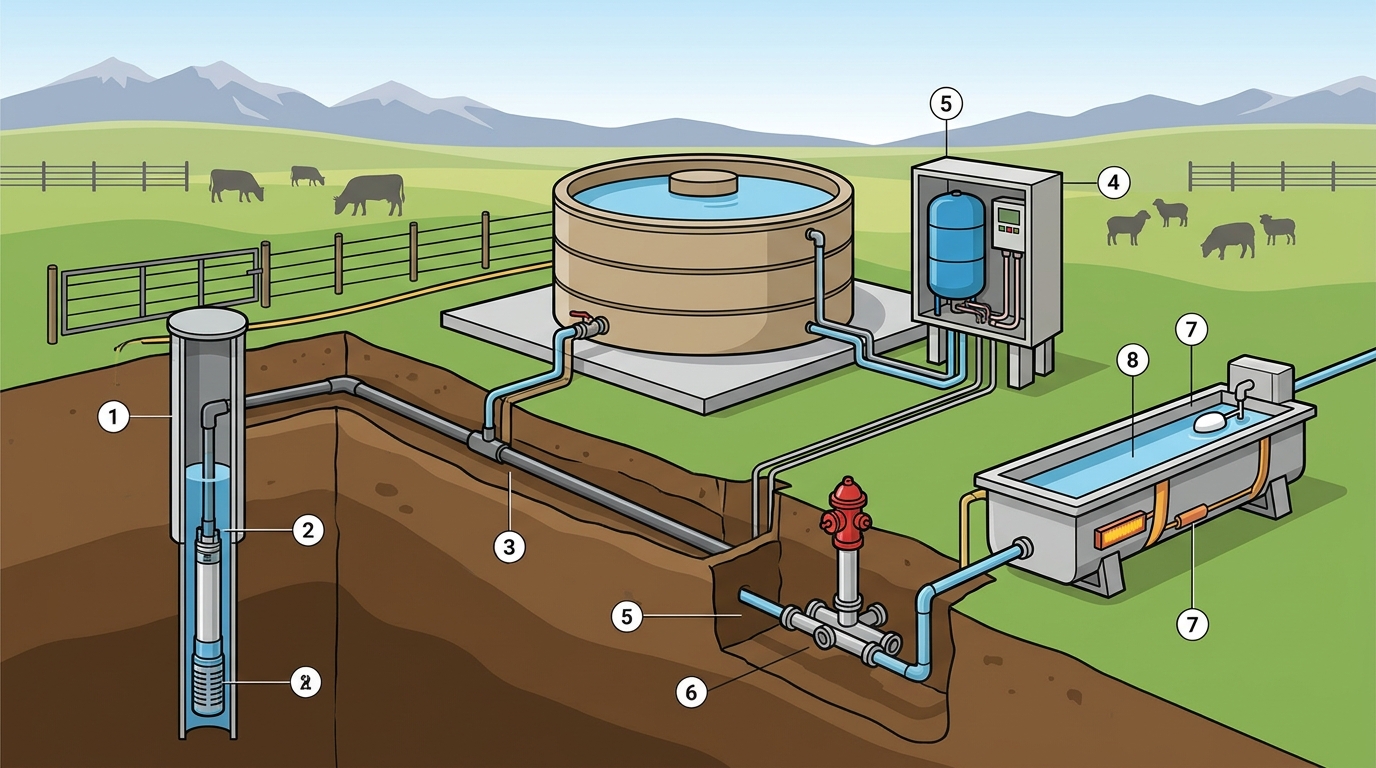
The well is the foundation of your water supply and typically represents the largest single line item in your budget. Drilling a well involves using heavy machinery to reach a water-bearing aquifer, which requires specialized equipment and skilled operators. In Wyoming, the depth and geology of the site can significantly influence the total cost of the drilling phase. LG Drilling operates multiple drill rigs and experienced crews capable of handling residential, commercial, and agricultural projects across the state.
2. Submersible Pump and Motor
The submersible pump is the engine that moves water from the well to your livestock. This component must be sized correctly to match the well's yield and the specific water demands of your herd. A pump that is too small will struggle to keep up with demand, while one that is too large can waste energy and wear out prematurely. Selecting the right motor and pump combination is critical for long-term system efficiency and reliability.
3. Electrical Supply and Power Source
4. Piping and Distribution Lines
Piping transports water from the wellhead to the livestock watering stations. The length and diameter of the pipes depend on the distance between the well and the animals and the required flow rate. High-quality, durable piping is essential to withstand the harsh Wyoming weather and prevent leaks that could waste water or freeze in winter. Properly sized distribution lines ensure that water reaches every station with adequate pressure.
5. Water Storage Tanks
Storage tanks provide a buffer of water to ensure availability during peak demand or power outages. These tanks can be installed above ground or underground, depending on the site conditions and climate. Having a sufficient storage capacity is crucial for livestock, as it guarantees a water supply even if the pump or power source experiences a temporary failure. The size of the tank should be calculated based on the number of animals and their daily water consumption.
6. Controls and Automation
Control systems manage the operation of the pump and monitor the water levels in the storage tanks. These systems can include pressure switches, float switches, and automated controllers that start and stop the pump as needed. Advanced controls can also monitor water quality and alert you to potential issues before they become critical. LG Drilling specializes in constant pressure systems that maintain steady water pressure, which is beneficial for consistent livestock hydration.
7. Water Treatment and Filtration
Treatment systems ensure that the water is safe and clean for your livestock to drink. Depending on the water source, you may need filtration to remove sediment, or treatment to address hardness or other contaminants. LG Drilling works with the Water-Right group of companies to design and install filtration and purification systems tailored to your specific needs. Clean water is essential for the health and productivity of your herd, making this a vital component of your budget.
Choosing the Right Components for Your Setup
When budgeting for a livestock watering system, prioritize the well and pump as your core investments, then scale the storage and treatment components based on your herd size and local water quality. Consulting with a local expert like LG Drilling ensures that each part is sized and selected to work together efficiently, providing a reliable water source for your animals in any weather condition.
Frequently Asked Questions
How deep does a livestock well typically need to be?
The depth of a livestock well varies significantly based on the local geology and water table. In Wyoming, wells can range from a few hundred feet to over a thousand feet deep. A professional well driller will assess the site to determine the optimal depth for a reliable water supply.
Can I use solar power for a livestock watering system?
Yes, solar power is an effective and cost-effective solution for remote livestock watering systems. LG Drilling can install solar panels and battery systems to power well pumps in areas without access to municipal electricity, providing a sustainable water source for your animals.
What is the purpose of a water storage tank in a livestock system?
A water storage tank acts as a buffer, storing water to ensure availability during peak demand or if the pump or power source fails. It helps maintain a consistent water supply for livestock, which is critical for their health and hydration.
Do I need water treatment for livestock?
While livestock are generally hardy, providing clean water is essential for their long-term health and productivity. Depending on the water source, you may need filtration to remove sediment or treatment to address hardness or other contaminants. LG Drilling can help design a treatment system that fits your specific water quality needs.
How often should I inspect my livestock watering system?
Regular inspections are recommended to prevent costly repairs and ensure system reliability. LG Drilling offers a range of inspection services, from visual checks to submersible camera inspections, which can help identify potential issues before they become major problems.