Ensuring the safety of your water supply requires more than a visual check. Professional well water testing is a systematic process that identifies contaminants and verifies system integrity. LG Drilling, LLC, based in Cheyenne, Wyoming, guides homeowners and agricultural operators through this critical procedure to protect their health and infrastructure.
1. Identify Your Testing Goals and Contaminants
Define what you need to measure before collecting samples. Different contaminants require different testing protocols. You must decide whether you are looking for basic bacteria, heavy metals, or specific chemical compounds. This initial step ensures the lab tests for the correct parameters relevant to your location and water source.
2. Obtain Certified Collection Kits
Use sterile, lab-approved containers to prevent sample contamination. Water testing kits are specialized tools designed to preserve the integrity of the sample during transport. Using standard household bottles can introduce foreign particles or chemicals that skew results. LG Drilling can assist in sourcing the appropriate kits for your specific testing needs.
3. Collect Samples from the Correct Fixture
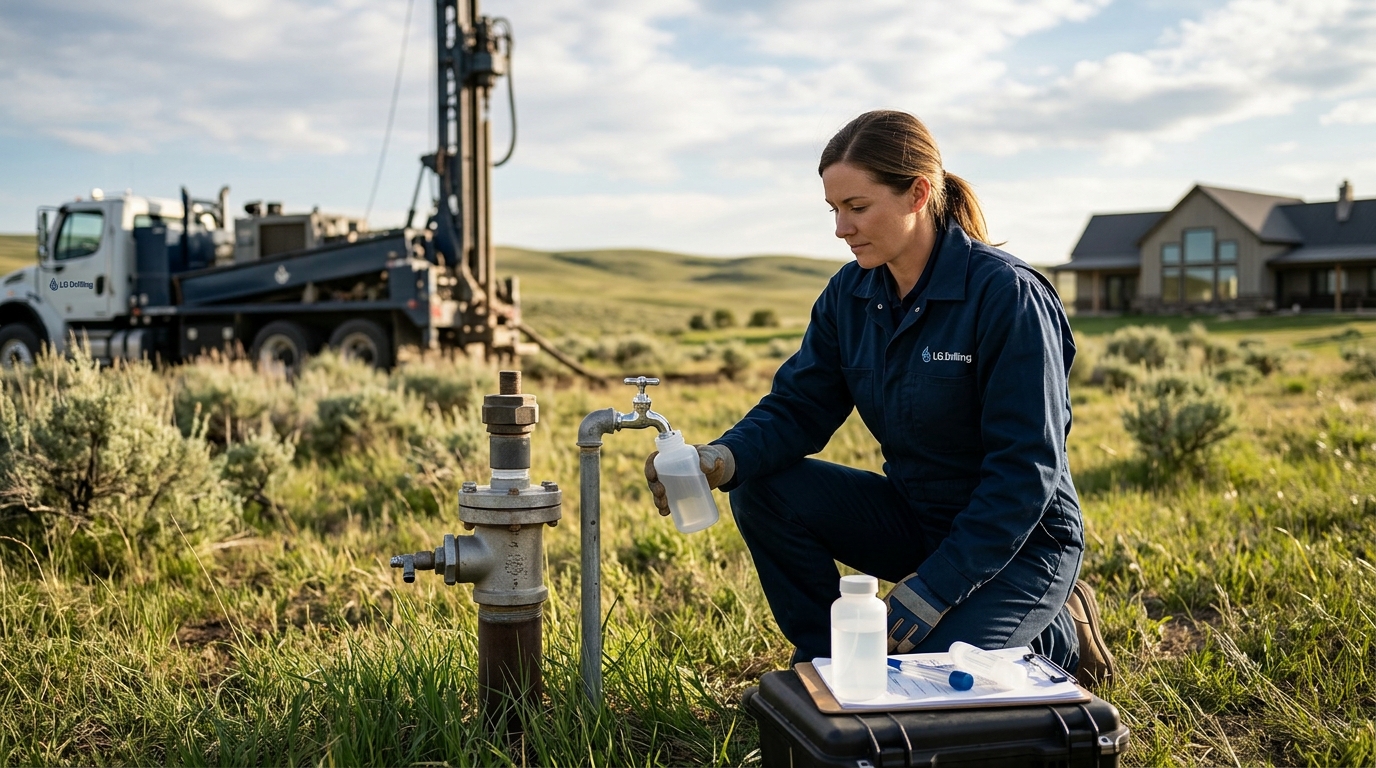
Draw water from the fixture closest to the well head. The sample must represent the raw water entering your home, not water that has already passed through filters or softeners. Run the tap for several minutes to clear stagnant water from the pipes. This ensures the sample reflects the actual quality of the aquifer water.
4. Submit Samples to an Accredited Laboratory
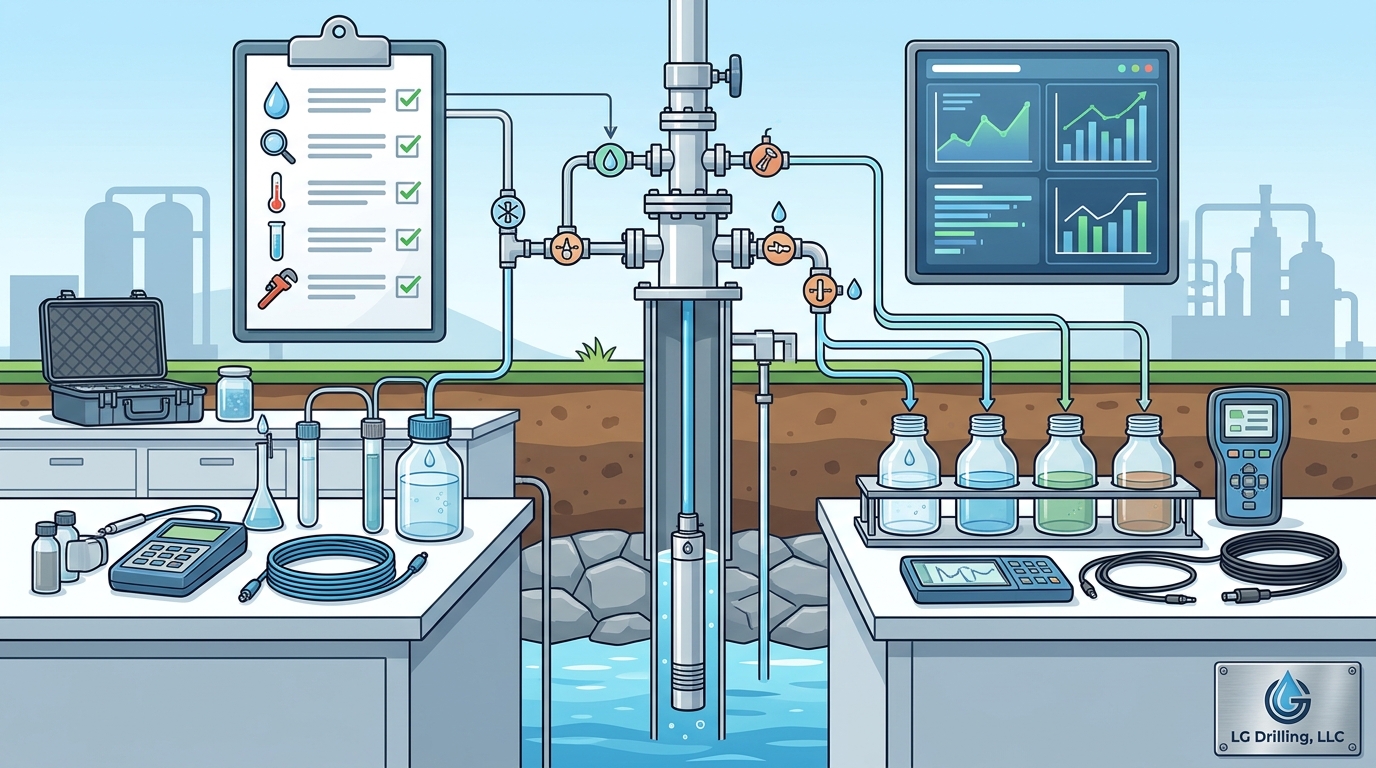
Deliver or ship samples to a state-certified lab within the required timeframe. Many contaminants degrade quickly, so timing is crucial. The lab must be accredited by the state or national standards to ensure accurate and legally defensible results. LG Drilling can submit samples to the Wyoming Public Health Lab to monitor and measure water quality and safety.
5. Analyze Results Against Safety Standards
Compare your data against established regulatory limits. A professional report will list detected levels of contaminants. You must interpret these numbers in the context of local and federal safety guidelines. Understanding the implications of each finding is essential for determining the next steps in water treatment.
6. Implement Treatment or Remediation Plans
Address any identified issues with appropriate filtration or disinfection systems. If contaminants are present, a treatment plan is necessary to make the water safe for consumption. This may involve installing reverse osmosis units, UV sterilizers, or water softeners. LG Drilling designs and installs these systems to fit your exact needs, providing clean, safe drinking water.
Choosing the Right Testing Approach
Select a testing frequency and scope based on your risk factors and local geology. Annual testing is a standard baseline for most residential wells. If you live near agricultural or industrial zones, more frequent or targeted testing may be required. Regular professional inspections can prevent costly repairs and ensure long-term water safety.
Frequently Asked Questions
How often should I test my well water?
It is generally recommended to test your well water at least once a year. You should also test immediately after any changes in water taste, color, or odor, or after significant flooding or drought conditions. Regular testing ensures that any emerging contaminants are caught early.
Can I test my well water myself?
While you can collect the sample, the analysis must be performed by a certified laboratory. Home test strips can provide a rough estimate of some parameters, but they lack the precision and accreditation of professional lab testing. For safety and compliance, professional lab analysis is the gold standard.
What contaminants should I look for in Wyoming?
Who can perform professional well water testing?
Certified water well drillers and service companies often facilitate the testing process. LG Drilling, LLC, offers inspection services that include submitting samples to the Wyoming Public Health Lab. They can guide you through the entire process from collection to result interpretation.
What happens if my water tests positive for contaminants?
If contaminants are found, you will need to implement a treatment solution. This could range from simple disinfection to complex filtration systems. LG Drilling specializes in designing and installing water treatment systems to address specific contaminant issues.
Does LG Drilling handle the entire testing process?
Yes, LG Drilling can perform a range of inspections on your water well system. This includes submitting samples to the Wyoming Public Health Lab to monitor and measure its quality and safety. They provide a comprehensive approach to ensuring your water is safe and reliable.
Conclusion
Professional well water testing is a vital component of maintaining a safe and reliable water supply. By following these six steps, you can ensure that your water meets safety standards and protects your household. LG Drilling, LLC, provides the expertise and resources to guide you through this process, from initial testing to final treatment installation. To plan your visit or schedule an inspection, contact our team.