What to Expect During a Professional Well Water Testing Appointment
During a professional well water testing appointment, a technician will collect water samples from your system, inspect visible components, and submit the samples to a certified laboratory for analysis. This process ensures your drinking water is safe from harmful bacteria, chemicals, and physical contaminants. LG Drilling, LLC in Cheyenne, Wyoming, provides these inspections to help homeowners and ranchers maintain reliable and safe water systems.
Preparing for Your Water Testing Appointment
Proper preparation ensures the testing results are accurate and representative of your daily water supply. Before the technician arrives, you should identify the location of your well head and any indoor plumbing shutoff valves. It is also helpful to have a clear path to the water source, especially if your well is located in a remote part of your property.
Well water testing is the process of collecting and analyzing water samples to determine their quality and safety. You should avoid using chlorine or other disinfectants in your well for at least 24 to 48 hours before the appointment, as these can interfere with bacterial testing. If you have a water softener or filtration system, the technician will typically collect samples from the raw well water before it passes through these treatment units.
LG Drilling technicians are experienced in navigating the unique terrain of Southeast Wyoming. Whether your well is in Laramie County or further out in Albany, Goshen, or Platte counties, our team is prepared to access your system efficiently. Having your property boundaries and well location marked can save time and help the technician focus on the technical aspects of the inspection.
The Sample Collection Process
Once on-site, the technician will begin by performing a visual inspection of the well head and surrounding area. They will look for signs of surface contamination, such as standing water, cracked casing, or debris near the wellhead. This initial check is critical because surface water can easily infiltrate a poorly sealed well, introducing bacteria and other contaminants.
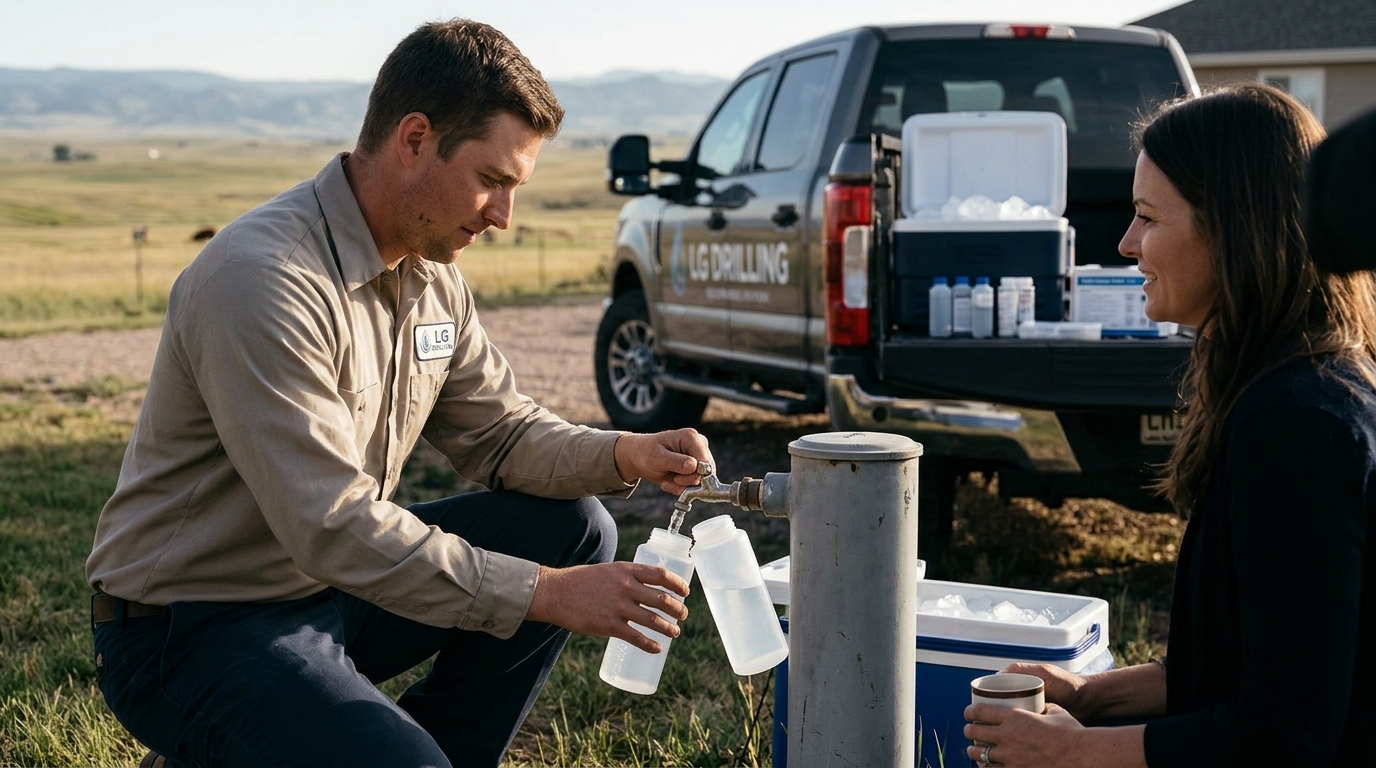
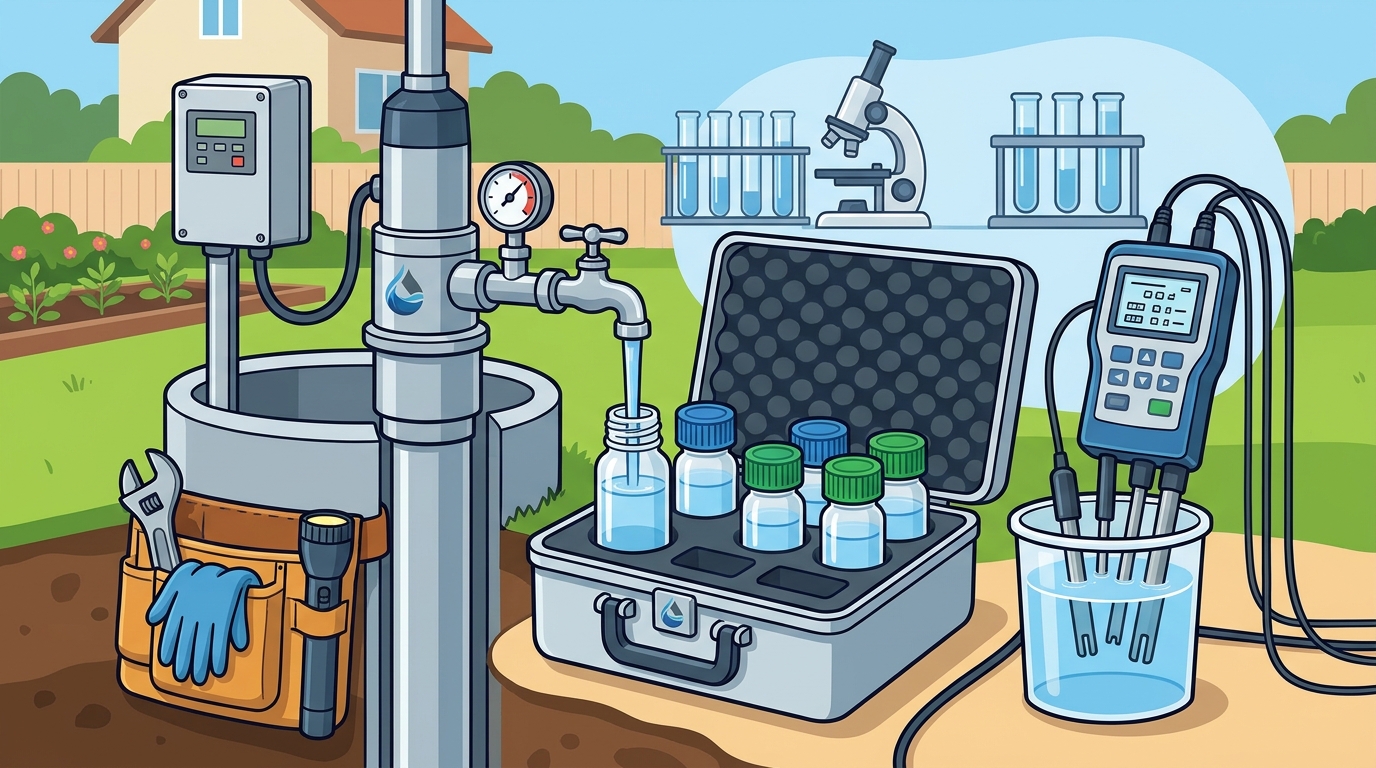
After the visual check, the technician will collect water samples using sterile containers. The collection process involves flushing the tap for several minutes to clear out stagnant water that has been sitting in the pipes. The technician will then fill the bottles according to strict protocols to prevent contamination during transport. For bacterial testing, the samples must be kept cool and delivered to the lab within a specific timeframe, often 30 hours or less.
At LG Drilling, we use the HouseCallPro customer service system to track your service needs from first contact to completion. This ensures that your samples are logged correctly and that you receive a detailed report once the lab results are back. The technician will also note the depth of your well and the type of pump installed, as these factors can influence water quality over time.
Laboratory Analysis and Key Contaminants
Once the samples reach the laboratory, they undergo a series of tests to identify potential health risks. The most common test is for total coliform bacteria, which indicates the presence of other harmful pathogens. If a positive coliform result is found, further testing for E. coli is usually required to determine if the contamination is of human or animal origin.
Testing your well water is the best way to ensure that your drinking water supply is safe from harmful chemicals and bacteria, according to the Virginia Department of Health. Beyond bacteria, labs often test for nitrates, which can be elevated in agricultural areas due to fertilizer runoff. They may also check for physical properties like turbidity (cloudiness) and chemical levels such as iron, manganese, and hardness. In Wyoming, where water can be quite hard, testing for mineral content is a standard part of the process.
LG Drilling can submit samples of your water to the Wyoming Public Health Lab to monitor and measure its quality and safety. This state-certified lab provides reliable data that helps you make informed decisions about your water treatment needs. Understanding these results is the first step toward protecting your family's health and your equipment from mineral buildup.
Interpreting Your Results and Next Steps
Receiving your lab report can feel overwhelming if you are unfamiliar with the technical jargon. A professional service provider will help you interpret the results in plain language. For example, if your water shows high levels of iron, you might notice a reddish tint or staining on your fixtures. If the water is hard, you may experience scale buildup in your water heater or reduced soap lathering.
Based on the results, the technician will recommend appropriate treatment solutions. If bacteria are present, the well may need to be disinfected or the casing repaired. If the water is simply hard or contains high mineral content, a water softener or filtration system may be the best solution. LG Drilling works with the Water-Right group of companies to provide a range of treatment options, including reverse osmosis, UV purification, and softening systems. according to Oregon Health Authority
It is important to note that a single test is a snapshot in time. Water quality can change due to seasonal variations, nearby construction, or changes in land use. Regular testing, at least once a year, is recommended to ensure ongoing safety. If you are buying a home with a well, a complete inspection and water test should be part of the due diligence process to prevent costly surprises later.
Ongoing Maintenance and System Integrity
Water well testing is not just about safety; it is also a diagnostic tool for your entire water system. High levels of sediment or sand in the water can indicate a failing well screen or a pump that is drawing from a dry zone. By monitoring these indicators, you can address mechanical issues before they lead to a complete system failure.
LG Drilling has completed more than 900 well systems and resolved more than 2,500 service calls across Wyoming. Our team of 14 field technicians brings over 100 years of combined experience with water systems. We understand that a reliable water supply is essential for both domestic use and agricultural operations. Our 24/7 emergency service ensures that if your water goes out, we can respond quickly, often resolving issues the same day.
Maintaining your well involves more than just testing. It includes regular inspections of your pressure tank, pump controls, and electrical connections. LG Drilling offers a range of inspection services, from simple visual checks to using submersible cameras to examine the inside of the well. These proactive measures can prevent very costly and disruptive repairs in the future. according to Private Well Water
Key Takeaways
- Prepare for your appointment by identifying your well location and avoiding disinfectants for 48 hours prior to testing.
- Sample collection involves flushing the system and using sterile containers to ensure accurate lab results.
- LG Drilling submits samples to the Wyoming Public Health Lab for state-certified analysis.
- Positive bacterial results may require well disinfection or casing repairs to restore safety.
- Regular annual testing is recommended to monitor for changes in water quality and system health. according to Private Well Water
- Water testing also serves as a diagnostic tool to identify mechanical issues like sediment or pump problems.
Frequently Asked Questions
How often should I test my well water?
It is generally recommended to test your well water at least once a year. You should also test immediately after any event that could contaminate the well, such as a flood, nearby construction, or if you notice a change in taste, odor, or color.
What is the difference between a visual inspection and a water test?
A visual inspection involves checking the physical components of your well system, such as the wellhead, pipes, and pump. A water test involves collecting samples and sending them to a lab to analyze the chemical and biological content of the water. Both are important for a complete assessment.
Can I test my well water myself?
While you can buy home test kits for basic parameters like pH or hardness, they are not as accurate or comprehensive as professional lab testing. For safety-critical tests like bacteria and nitrates, professional collection and certified lab analysis are strongly recommended.
What should I do if my water tests positive for bacteria?
If your water tests positive for coliform or E. coli, you should stop using it for drinking or cooking until it is disinfected. Contact a professional like LG Drilling to perform a well disinfection and identify the source of the contamination.
Does LG Drilling handle the lab work?
Yes, LG Drilling collects the samples and submits them to the Wyoming Public Health Lab. We then help you interpret the results and recommend any necessary treatment or repairs.
How long does it take to get results?
Lab results typically take 3 to 7 business days, depending on the specific tests requested. Bacterial tests are usually faster, while chemical panels may take a bit longer.
Schedule Your Professional Water Inspection
Ensuring the safety and reliability of your water supply is a responsibility that requires professional expertise. LG Drilling, LLC provides comprehensive well water testing and inspection services for homeowners and agricultural operations across Cheyenne and Southeast Wyoming. Our team is dedicated to helping you understand your water quality and maintaining a system that works for you. To plan your visit or to discuss your specific water needs, today.