
What should I budget for installing a complete livestock watering setup with solar power?
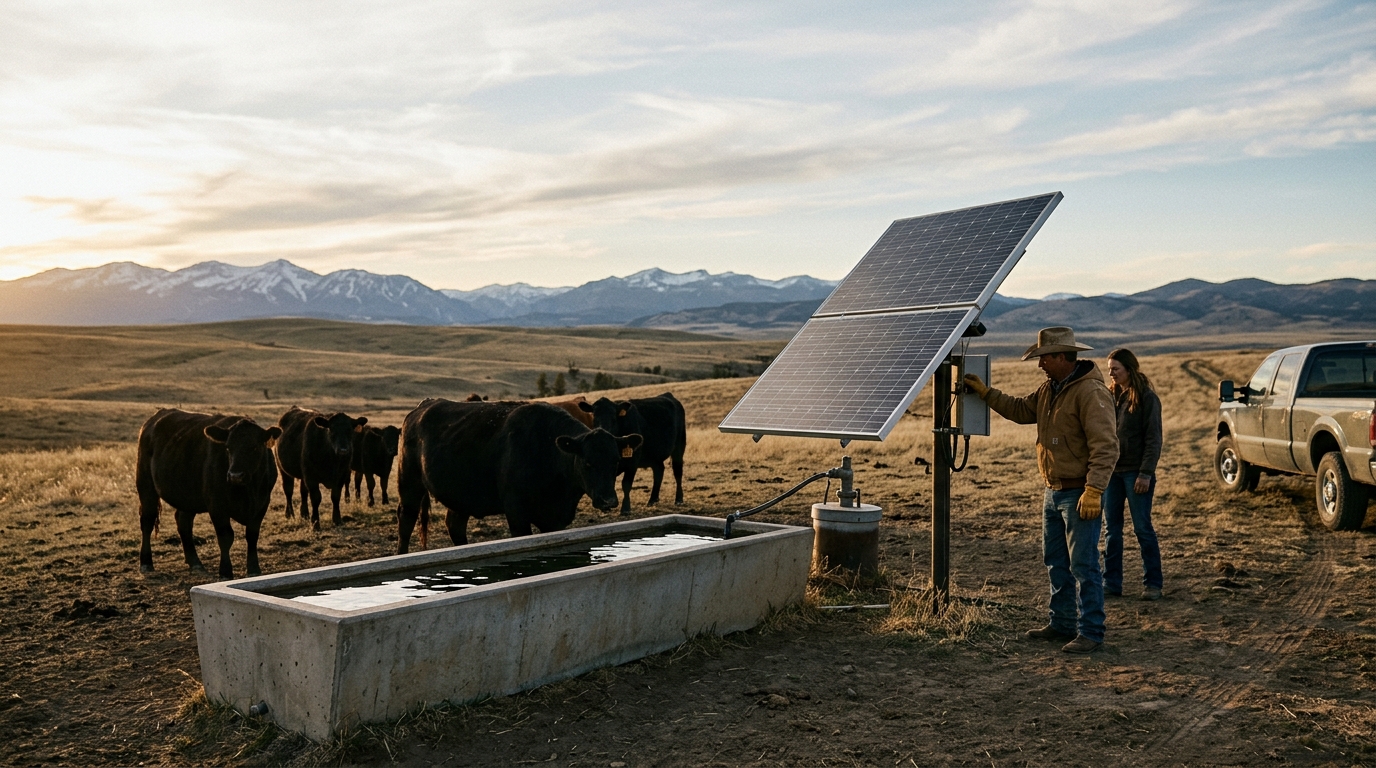
When planning a solar-powered livestock watering system, you should budget for the well, the solar array, the pump, and the storage tanks. The total cost depends heavily on the distance from the well to the livestock and the daily water demand. LG Drilling in Cheyenne, Wyoming, handles the entire process from drilling to solar installation, ensuring your remote property has reliable water access without utility power.
The Core Components of a Solar Watering System
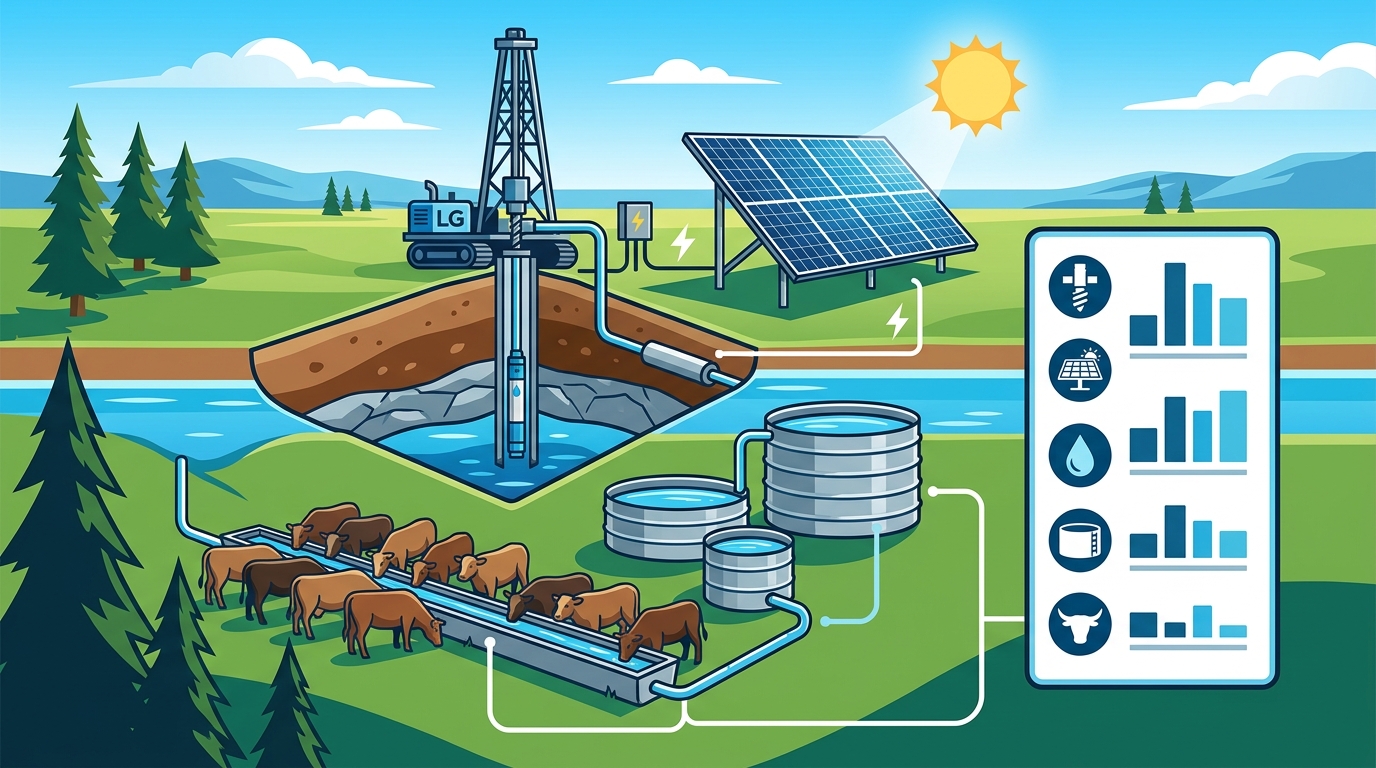
A complete livestock watering setup is more than just a pump. It is an integrated system that moves water from the ground to the animals. The primary components include the water source, the power source, the pumping mechanism, and the storage infrastructure. Understanding these parts helps you allocate your budget correctly. according to Solar Powered Groundwater
Water Source and Well Drilling
The foundation of any system is the well. If you do not have an existing well, you must budget for drilling. LG Drilling operates five drill rigs and has completed more than 900 well systems across Wyoming. The cost of drilling varies based on depth and geology, but it is a one-time capital expense that secures your water supply. according to Solar Powered Livestock
Solar Power and Pumping
Solar-powered well pumps are a cost-effective solution in remote areas where electricity is not available. The solar array must be sized to match the pump's energy requirements. This ensures the system can operate efficiently even during periods of lower sun exposure.
Storage Capacity and Water Demand
Livestock need daily access to clean water, so a large stock tank or a storage tank that can hold several days' supply will be needed to get through the times that the solar panels are not generating power. This is a critical budget line item that is often overlooked. The size of your storage tank depends on the number of animals and their daily water consumption.
For example, a herd of 50 cattle might require a significantly larger storage capacity than a small group of horses. LG Drilling can install tanks and storage cisterns, delivering a turnkey system for watering livestock. Proper sizing prevents water shortages during cloudy weather or winter months.
Remote Access and Infrastructure
Many ranches are removed from a municipal water supply or even utility power. In these cases, the infrastructure costs can be higher. You need to budget for pipe and wire runs from the well to the livestock area. LG Drilling can run pipe and wire, and install tanks and storage cisterns, delivering a turnkey system for watering livestock.
The distance between the well and the water troughs is a major factor in the total cost. Longer runs require more materials and labor. Additionally, you may need to consider the terrain and any obstacles that could complicate the installation.
Maintenance and Long-Term Costs
While solar systems have lower ongoing energy costs, they still require maintenance. You should budget for periodic inspections and potential repairs. LG Drilling offers 24/7 emergency service and repair for all well system components. Their team of technicians is on call 365 days a year, ensuring that any issues are resolved quickly.
Regular maintenance extends the life of your equipment and prevents costly breakdowns. An inspection of a water well system can often prevent very costly and disruptive repairs in the future. LG Drilling can perform a range of inspections, from a simple visual check to a submersible camera inspection.
Financing and Incentives
For current incentives, check with your solar dealer or visit the Database of State Incentives for Renewable Energy (DSIRE). Even with big price decreases and readily available financial incentives, it is important to plan your budget carefully. Financing can help spread the cost over time, making the investment more manageable.
Key Takeaways
- Budget for the well, solar array, pump, and storage tanks as separate line items.
- Storage capacity should be sized to hold several days' supply of water.
- Distance from the well to the livestock area significantly impacts infrastructure costs.
- Regular maintenance and inspections are essential for long-term system reliability.
- Financing options and renewable energy incentives can help manage the initial investment.
- LG Drilling provides turnkey solutions for agricultural water systems in Wyoming.
Frequently Asked Questions
How much water do livestock need daily?
Livestock water needs vary by species, size, and climate. Generally, cattle require between 5 to 15 gallons per head per day, while horses may need 5 to 10 gallons. It is important to calculate your total daily demand to size your storage tanks correctly.
Can a solar pump run in winter?
Yes, solar pumps can run in winter, but production is lower due to shorter days and potential snow cover. This is why storage tanks are critical. They hold water generated during sunny periods to ensure a continuous supply during low-production times.
Does LG Drilling handle permits?
Yes, LG Drilling can apply for your permit, file your Statement of Completion, and do your NRCS and county conservation district paperwork. This ensures your system is compliant with state and local regulations.
What is the lifespan of a solar well pump?
With proper maintenance, a solar well pump can last 10 to 20 years. The solar panels themselves often have a lifespan of 25 years or more. Regular inspections can help identify issues before they become major problems.
Is financing available for solar water systems?
Conclusion
Installing a complete livestock watering setup with solar power is a significant investment, but it provides a reliable and sustainable water source for your ranch. By budgeting for the well, solar array, pump, and storage tanks, you can ensure your system meets your needs. LG Drilling in Cheyenne, Wyoming, has the expertise to handle every aspect of the project, from drilling to solar installation. To plan your visit, for a quote and to discuss your specific water needs.