
Who to Call in Cheyenne for 24/7 Well Emergencies
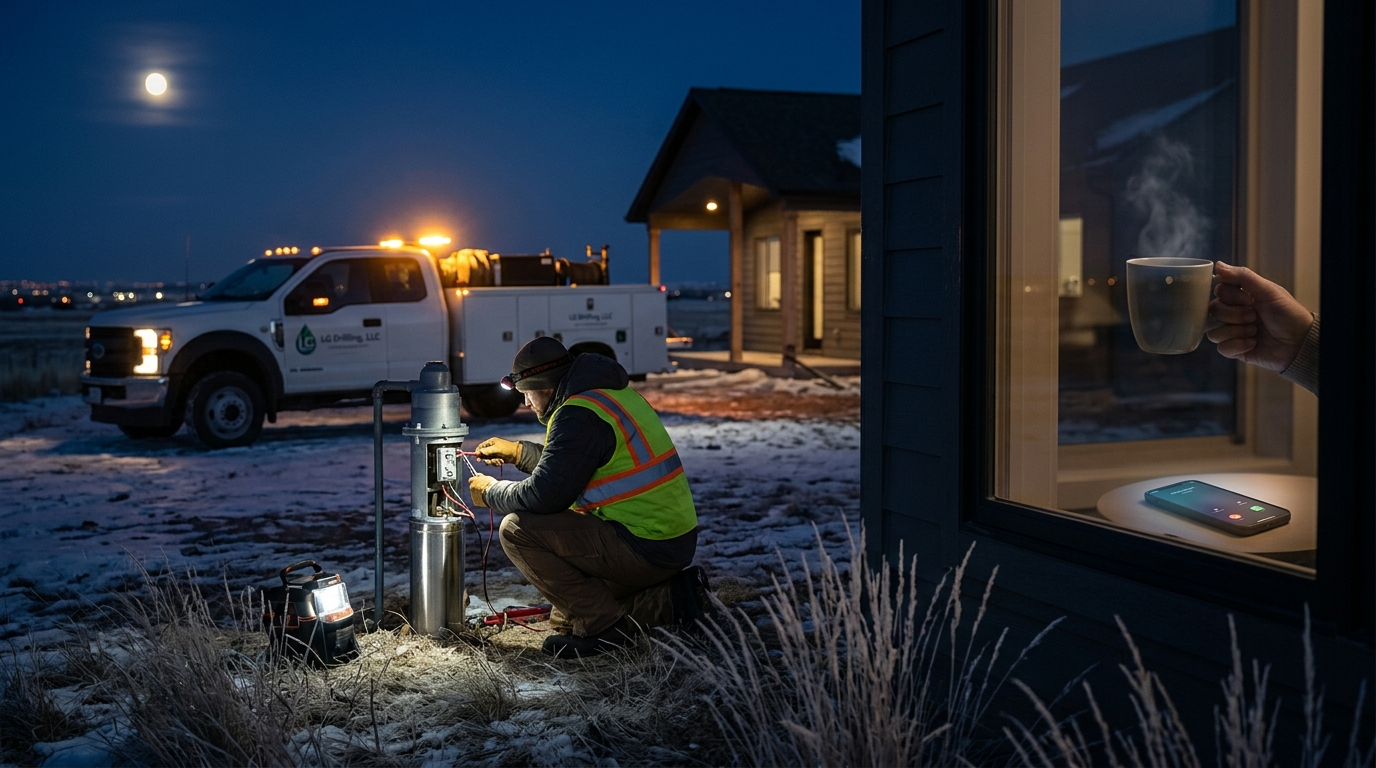
When your water well stops working at night or on the weekend, you need a local provider with true 24/7 emergency response capabilities. LG Drilling, LLC, based in Cheyenne, Wyoming, offers round-the-clock emergency service for residential and commercial well systems. This guide covers how to choose a reliable emergency well service, what to ask, how to verify credentials, and what to expect during a repair.
How to Choose a Reliable Emergency Well Service
Choosing the right emergency well service provider requires looking beyond basic availability. A true 24/7 service means technicians are on call, not just an answering machine. LG Drilling, LLC, operates with a team of field technicians available 24/7, 365 days a year, ensuring that when you call, a human answers and a technician can be dispatched. The key differentiator is the ability to respond to harsh weather conditions. Many companies decline service during winter storms or extreme heat, but a reliable provider will still show up. Look for a company that explicitly states they do not put you on a waiting list during emergencies. This commitment to availability is the primary factor in selecting a provider for critical water infrastructure.
Response Time and Availability
Response time is the most critical metric for emergency service. A provider that promises a 15-minute response window is significantly different from one that promises a 4-hour window. LG Drilling responds to calls within 15 minutes and can often resolve problems the same day, sometimes in as little as two hours. This speed is possible because they maintain a fleet of service trucks and keep critical parts in stock. When evaluating a provider, ask specifically about their average response time for after-hours calls. A vague answer like "as soon as possible" is a red flag. A specific answer like "within 15 minutes" indicates a structured emergency protocol.
Technical Expertise and Fleet
The technical capability of the service team matters as much as their availability. A provider with a diverse fleet of equipment and a team with combined decades of experience is better equipped to handle complex issues. LG Drilling employs 14 field technicians with over 100 years of combined experience in water systems. They operate multiple service and pump trucks, allowing them to handle various types of failures simultaneously. This depth of resources means that if one truck is busy, another can be dispatched. This redundancy is essential for a true 24/7 operation. It ensures that your emergency is not deprioritized because another job is in progress.
What to Ask Before Committing
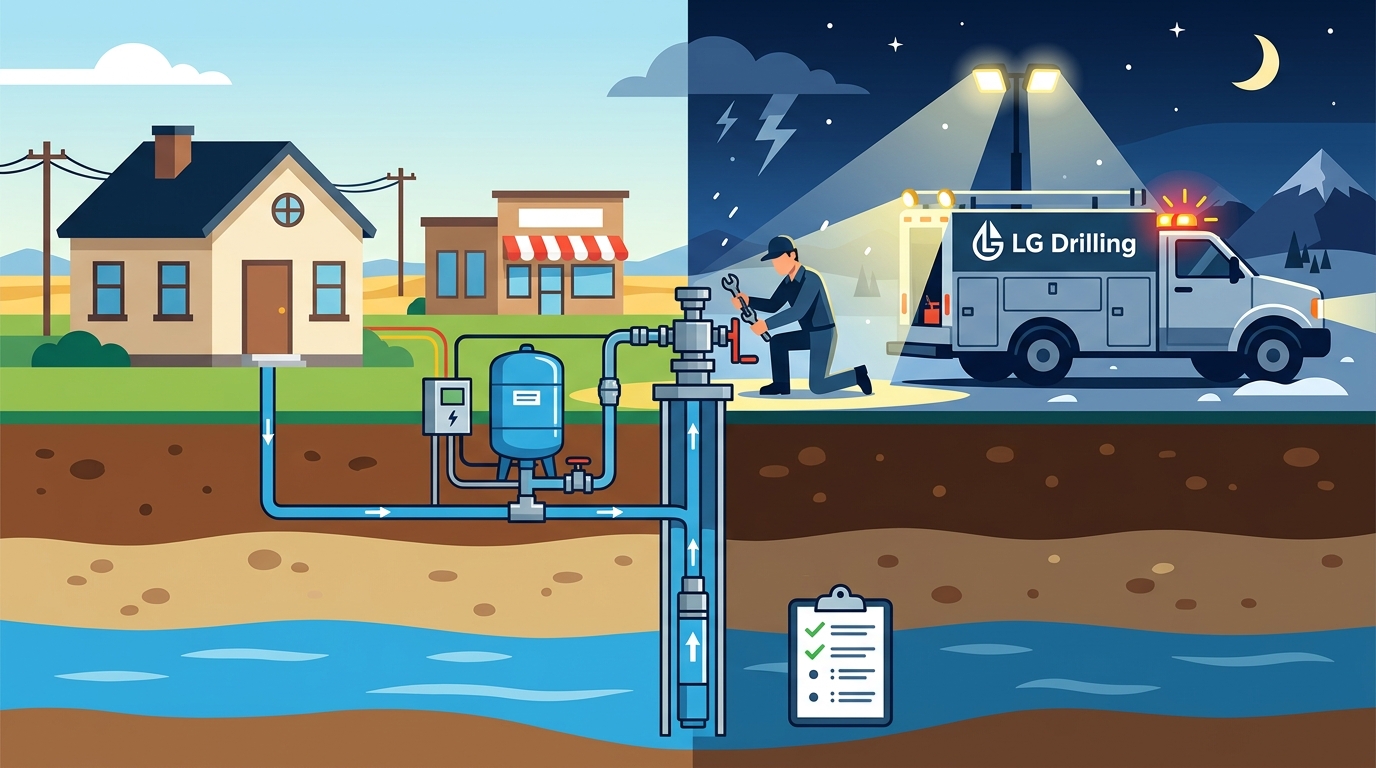
Before you commit to an emergency service provider, you should ask specific questions to gauge their readiness. These questions help you understand their operational capacity and commitment to your needs. Asking the right questions upfront can save you time and money during a crisis. It also helps you establish a baseline for what to expect when the technician arrives. The following questions are essential for any homeowner or business owner in Cheyenne considering a well service provider.
Key Questions for Emergency Providers
- Do you have a dedicated 24/7 emergency line? This ensures that your call is routed to a live person, not a general inbox.
- What is your average response time for after-hours calls? This sets clear expectations for how quickly help will arrive.
- Do you carry common replacement parts in your trucks? Having parts on hand can reduce repair time from days to hours.
- Do you service in all weather conditions? This confirms that your emergency will not be delayed due to weather.
- What is your pricing structure for emergency calls? Understanding the cost upfront prevents surprises.
How to Verify Credentials and Claims
Verifying the credentials of a well service provider is crucial for ensuring quality and safety. In Wyoming, well drilling and servicing are regulated by the State Engineer. A reputable provider will be licensed and in good standing with the state. You can verify a company's license status through the Wyoming State Engineer's office. This step ensures that the provider is legally authorized to perform the work. It also provides a record of any complaints or violations. Additionally, check for insurance and bonding. A licensed and insured provider protects you from liability in case of accidents or damage during the repair. This verification process is quick and can be done online before you ever make a call.
Checking State Engineer Records
The Wyoming State Engineer's office maintains records of licensed well drillers and pump installers. You can search their database to confirm that a company is licensed. This database also shows the scope of their license, indicating whether they are authorized to drill, install pumps, or perform repairs. A company that is licensed for all three areas is more versatile and likely more experienced. If a company cannot provide its license number or if it does not appear in the state database, do not hire them. This is a non-negotiable safety check. It ensures that the work is performed to state standards and that the provider is accountable to regulatory oversight.
How Emergency Well Service Works
Understanding the process of an emergency well service call helps you prepare and manage expectations. The process typically begins with a phone call to the emergency line. A dispatcher will take your details and the nature of the problem. They will then dispatch a technician to your location. The technician will arrive, assess the issue, and provide a diagnosis. If a repair is needed, they will explain the options and costs. With your approval, they will perform the repair. The process is designed to be as efficient as possible, minimizing downtime. LG Drilling uses a customer service system to track your service needs from first contact to completion, ensuring transparency throughout the process.
Step-by-Step Emergency Response
- Call the Emergency Line: Contact the provider's 24/7 line and describe the issue.
- Dispatch: A technician is assigned and dispatched to your location.
- Assessment: The technician arrives and assesses the well system.
- Diagnosis and Quote: The technician explains the problem and provides a cost estimate.
- Repair: With your approval, the technician performs the repair.
- Testing: The system is tested to ensure it is working correctly.
- Completion: The technician provides a summary of the work and any recommendations.
What Emergency Well Repairs Cost
The cost of an emergency well repair varies based on several factors. The type of issue, the time of day, and the complexity of the repair all influence the price. Emergency calls typically carry a premium over standard business hours. This premium covers the on-call status of the technicians and the immediate dispatch. The actual repair cost depends on the parts and labor required. For example, a simple pressure switch replacement is less expensive than a submersible pump replacement. It is important to get a clear quote before work begins. This quote should include the emergency call fee, labor, and parts. LG Drilling provides financing options for larger repairs, making it easier to manage the cost. Understanding these cost drivers helps you budget for unexpected repairs.
Factors Influencing Repair Costs
- Time of Day: After-hours calls often have a higher service fee.
- Complexity: Complex repairs require more labor and specialized tools.
- Parts: The cost of replacement parts varies by brand and type.
- Accessibility: Difficult-to-access wells may require more time and effort.
Common Mistakes and How to Avoid Them
Homeowners often make mistakes during well emergencies that can lead to higher costs or prolonged downtime. One common mistake is not having a list of trusted providers. When an emergency strikes, you may not have time to research. Having a pre-verified list of providers saves time. Another mistake is not documenting the issue. Taking photos or videos of the problem can help the technician diagnose it faster. A third mistake is not having a backup water source. If your well is down, you need water for drinking, cooking, and sanitation. Having a plan for backup water is essential. Avoiding these mistakes ensures a smoother and faster resolution to your emergency.
Preparation Tips for Well Emergencies
- Keep a List of Providers: Save the contact information of trusted 24/7 providers.
- Document the Issue: Take photos or videos of any visible problems.
- Have a Backup Water Plan: Know where to get water if your well is down.
- Know Your System: Understand the basic components of your well system.
Emergency Service Versus Standard Scheduling
Emergency service differs from standard scheduling in several key ways. Standard scheduling is for planned maintenance or non-urgent repairs. It is typically available during business hours and may have a waiting period. Emergency service is for urgent issues that require immediate attention. It is available 24/7 and has a faster response time. The cost of emergency service is generally higher due to the premium for immediate availability. However, the benefit is that your water supply is restored quickly. For non-urgent issues, standard scheduling is more cost-effective. For urgent issues, emergency service is the only option. Understanding the difference helps you choose the right service for your needs.
Comparison of Service Types
| Feature | Emergency Service | Standard Scheduling |
|---|---|---|
| Availability | 24/7 | Business Hours |
| Response Time | Within 15 minutes | 1-3 days |
| Cost | Higher (Emergency Fee) | Standard |
| Best For | Urgent Repairs | Planned Maintenance |
Handling Specific Emergency Scenarios
Different well emergencies require different approaches. Understanding the specific scenario helps you communicate effectively with the service provider. For example, a loss of water pressure may indicate a pump failure or a pressure tank issue. A complete loss of water may indicate a power outage or a well casing failure. Each scenario has a different urgency and potential cost. By identifying the specific issue, you can provide the provider with more accurate information. This helps them dispatch the right technician with the right parts. It also helps you prepare for the repair. For instance, if you suspect a power outage, check your breaker before calling. This simple step can save you an unnecessary service call.
Common Emergency Scenarios
- Loss of Water Pressure: May indicate a pump or pressure tank issue.
- Complete Loss of Water: May indicate a power outage or well failure.
- Discolored Water: May indicate a sediment issue or pipe corrosion.
- Unusual Noises: May indicate a pump or valve issue.
Regulatory Rules and Consumer Protections
Well drilling and servicing in Wyoming are regulated by the State Engineer. These regulations ensure that work is performed to safety and quality standards. Consumers have the right to hire only licensed providers. They also have the right to a clear and detailed quote before work begins. If a dispute arises, the State Engineer's office can mediate. Additionally, consumers are protected by consumer protection laws. These laws prohibit deceptive practices and ensure fair billing. Understanding these rules and protections empowers you to make informed decisions. It also ensures that you are treated fairly by your service provider. Always request a written quote and keep records of all communications.
Consumer Rights in Wyoming
- Right to a Licensed Provider: You have the right to hire only licensed professionals.
- Right to a Clear Quote: You have the right to a detailed quote before work begins.
- Right to Fair Billing: You have the right to be billed fairly and transparently.
- Right to Dispute Resolution: You have the right to dispute charges through the State Engineer's office.
Local Specifics for Cheyenne and Southeast Wyoming
Cheyenne and Southeast Wyoming have specific environmental and regulatory factors that affect well systems. The region experiences harsh winters, which can freeze pipes and damage equipment. This makes 24/7 service even more critical. The water in the region is often hard, which can lead to mineral buildup in pipes and pumps. This requires regular maintenance to prevent clogs and corrosion. Additionally, the region is prone to drought, which can affect well yields. Understanding these local specifics helps you prepare for potential issues. It also helps you choose a provider that is familiar with the local conditions. LG Drilling has extensive experience in the region, making them well-equipped to handle these specific challenges.
Regional Challenges
- Harsh Winters: Can freeze pipes and damage equipment.
- Hard Water: Can lead to mineral buildup in pipes and pumps.
- Drought: Can affect well yields and water levels.
Timing and Response Expectations
Timing is critical in a well emergency. The sooner you call for service, the sooner your water supply is restored. Delays can lead to further damage and higher repair costs. For example, a small leak can become a major flood if not addressed quickly. A pump that is running dry can burn out and require a full replacement. Acting quickly minimizes these risks. LG Drilling's 15-minute response time ensures that help is on the way quickly. This speed is a significant advantage in an emergency. It also means that you can get back to your normal routine faster. Do not wait for the problem to get worse. Call for service as soon as you notice an issue.
Response Time Expectations
- Initial Contact: Within 15 minutes of your call.
- Technician Arrival: Within 1-2 hours, depending on location.
- Repair Completion: Same day for most issues.
Long-Term Results and Maintenance
Emergency repairs are a short-term solution. Long-term reliability requires regular maintenance. A well system that is not maintained is more likely to fail. Regular inspections can identify potential issues before they become emergencies. LG Drilling offers inspection services that can help you monitor the health of your well system. These inspections include visual checks, water quality testing, and component testing. By investing in regular maintenance, you can extend the life of your well system and avoid costly emergencies. It also ensures that your water is safe and clean. A proactive approach to maintenance is the best way to ensure long-term reliability.
Benefits of Regular Maintenance
- Extended System Life: Regular maintenance extends the life of your well system.
- Prevented Emergencies: Identifies potential issues before they become emergencies.
- Safe Water: Ensures that your water is safe and clean.
- Cost Savings: Prevents costly emergency repairs.
Key Takeaways
- Choose a provider with true 24/7 availability and a fast response time.
- Verify the provider's license with the Wyoming State Engineer's office.
- Ask specific questions about response time, parts availability, and pricing.
- Understand the cost drivers for emergency repairs, including time of day and complexity.
- Prepare for emergencies by having a list of trusted providers and a backup water plan.
- Act quickly to minimize damage and repair costs.
- Invest in regular maintenance to prevent future emergencies.
Frequently Asked Questions
Who can I call in Cheyenne when my well stops working at night?
You can call LG Drilling, LLC, which offers 24/7 emergency service for well systems in Cheyenne and Southeast Wyoming. They have a dedicated emergency line and a team of technicians available around the clock.
How quickly can a technician arrive for an emergency call?
LG Drilling responds to calls within 15 minutes and can often resolve problems the same day, sometimes in as little as two hours. The exact arrival time depends on your location and the current workload.
Do you service in all weather conditions?
Yes, LG Drilling services in all weather conditions. They do not decline service due to harsh weather or put you on a waiting list during emergencies.
How much does an emergency well repair cost?
The cost of an emergency well repair varies based on the type of issue, the time of day, and the complexity of the repair. Emergency calls typically carry a premium over standard business hours. LG Drilling provides financing options for larger repairs.
How can I verify that a well service provider is licensed?
You can verify a provider's license through the Wyoming State Engineer's office. They maintain a database of licensed well drillers and pump installers. You can search this database to confirm that a company is licensed and in good standing.
What should I do if my well is down and I have no water?
If your well is down and you have no water, call a 24/7 emergency service provider immediately. In the meantime, use any backup water sources you have. If you do not have a backup source, consider getting water from a neighbor or a local fire station.
Do you offer financing for well repairs?
Yes, LG Drilling offers financing options for well repairs. This makes it easier to manage the cost of larger repairs. You can inquire about financing options when you request a quote.
How often should I have my well system inspected?
It is recommended to have your well system inspected at least once a year. Regular inspections can identify potential issues before they become emergencies. LG Drilling offers inspection services that include visual checks, water quality testing, and component testing.