
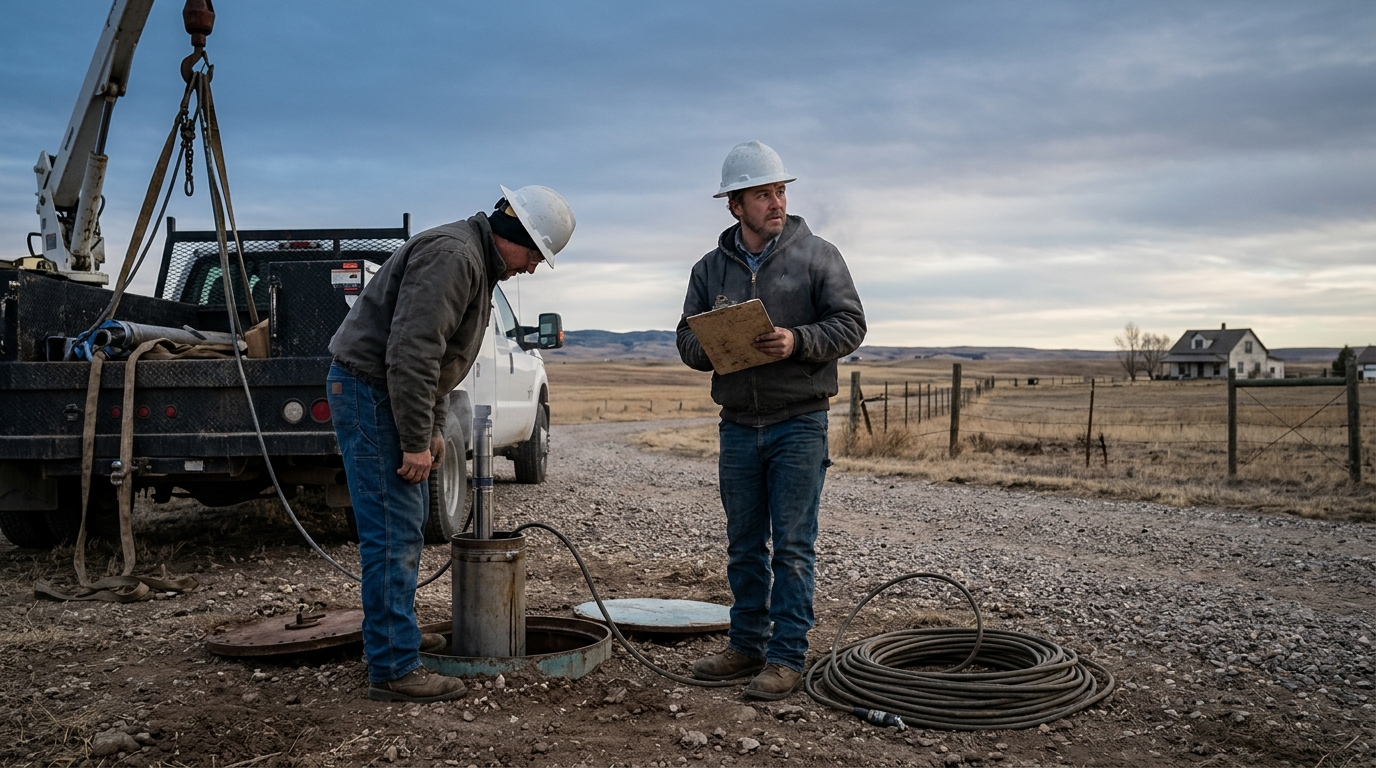
Yes, well depth directly impacts emergency pump repair pricing. Deeper wells require longer submersible pumps, heavier lifting equipment, and more labor time to access the motor. In Cheyenne and Southeast Wyoming, this depth factor can significantly increase the total cost of an urgent repair compared to shallower residential wells.
The Mechanics of Depth and Labor Costs
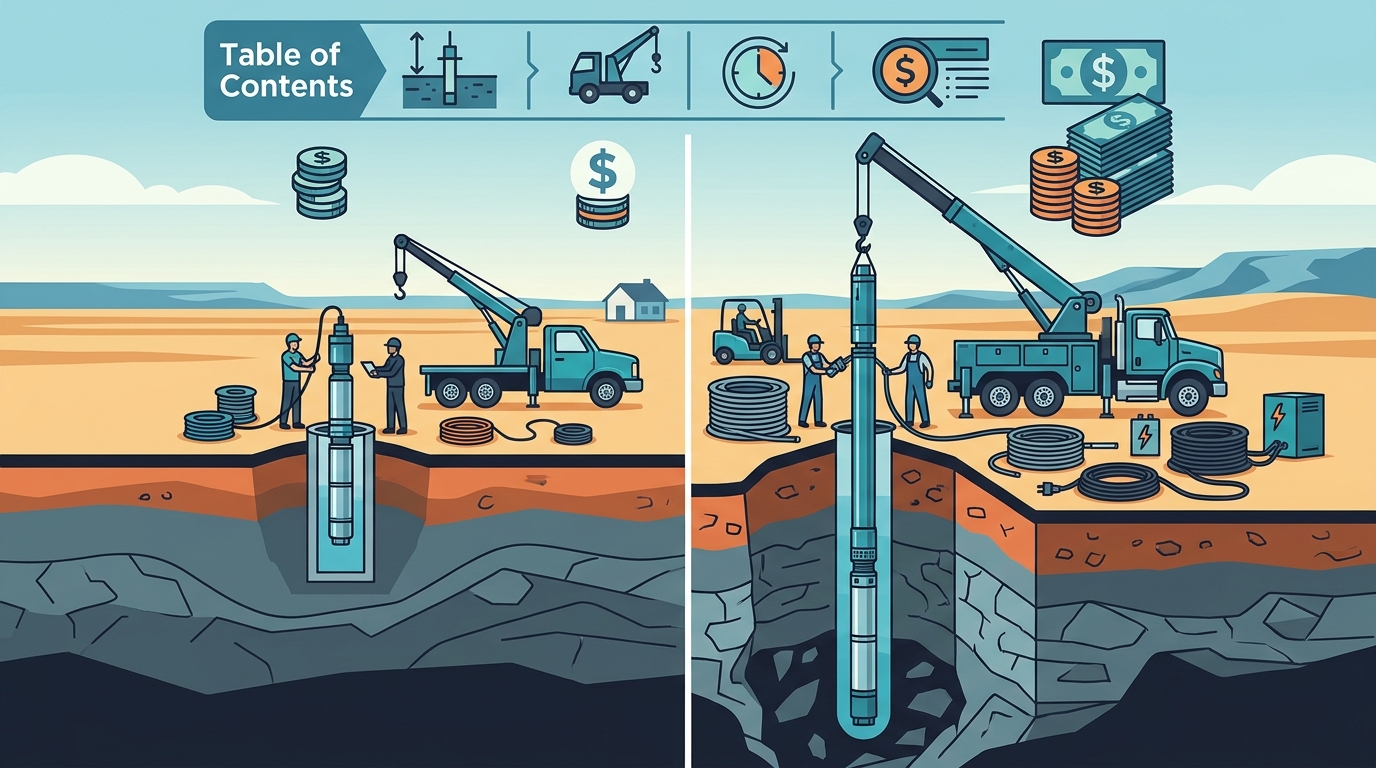
Submersible pumps are installed at the bottom of the well casing. The deeper the water table, the longer the pump assembly and cable must be. When a pump fails, technicians must pull the entire assembly out of the well. This process is physically demanding and time-consuming. A pump in a 100-foot well is relatively easy to retrieve. A pump in a 400-foot well requires specialized winches and more crew members to manage the weight and length of the cable safely.
LG Drilling operates in Cheyenne and Southeast Wyoming, where well depths vary significantly based on local geology. Our technicians are equipped with the necessary tools to handle these variations. The labor cost is often the largest component of the repair bill. Because pulling a deep pump takes longer, the hourly labor rate multiplies over a longer duration. This is why two homes with identical pump failures can have very different repair invoices based solely on well depth.
Equipment and Material Considerations
Depth also dictates the type of pump required. Deeper wells often need higher horsepower pumps to push water up a greater vertical distance. If the original pump was undersized for the depth, or if the failure requires a replacement rather than a repair, the cost of the new unit increases. High-horsepower submersible pumps are more expensive than low-horsepower units used in shallow wells.
Additionally, the cable length is a critical material cost. Submersible pump cables are not standard electrical wire. They are heavy-duty, waterproof cables that cost significantly more per foot. Replacing a 200-foot cable is a major expense. LG Drilling stocks various cable lengths and pump models to address these needs efficiently. Understanding that materials scale with depth helps homeowners anticipate the financial impact of a failure.
Emergency Response and Availability
Emergency repairs carry a premium due to after-hours labor and immediate dispatch. LG Drilling provides 24/7 emergency service for water well issues. When a pump fails at night or on a weekend, the response time is critical. However, the complexity of the job, driven by depth, still applies. A technician responding to a deep well emergency must bring the correct heavy-duty equipment to the site. This preparation takes time and resources, which is reflected in the emergency service fee.
The combination of emergency labor rates and the physical difficulty of deep well work creates a higher price point. Homeowners should be aware that while the emergency call-out fee is fixed, the repair cost itself is variable and depth-dependent. Planning for this variability is essential for budgeting during a water crisis.
Preventive Maintenance and Depth Awareness
Knowing your well depth is the first step in managing repair costs. Most well owners have a Statement of Completion from the State Engineer that lists the exact depth of the well. This document is crucial for any service provider. If you do not have this document, LG Drilling can help locate or verify your well records. Accurate depth information allows for precise quoting before work begins.
Regular inspections can also mitigate depth-related costs. By monitoring pump performance, homeowners can detect issues before a total failure occurs. A gradual decline in pressure or frequent cycling of the pressure switch may indicate a pump problem. Addressing these signs early can prevent a catastrophic failure that requires a full pull-out and replacement. LG Drilling offers inspection services to help maintain the integrity of your water system.
Key Takeaways
- Well depth is a primary driver of emergency pump repair pricing due to increased labor time.
- Deeper wells require longer, more expensive cables and potentially higher horsepower pumps.
- Emergency service fees are separate from the repair costs, which scale with depth.
- LG Drilling provides 24/7 emergency response for wells in Cheyenne and Southeast Wyoming.
- Having your well depth documentation ready can speed up the repair process.
- Preventive maintenance can reduce the likelihood of deep well pump failures.
Frequently Asked Questions
How much does well depth add to a pump repair bill?
There is no fixed amount, as it depends on the specific depth and the nature of the failure. Generally, each additional 100 feet of depth can add significant labor and material costs. A deep well repair can be twice as expensive as a shallow well repair for the same type of failure.
Does LG Drilling handle deep well emergencies?
Yes, LG Drilling handles wells of various depths in Cheyenne and Southeast Wyoming. Our team is equipped with the necessary tools and experience to manage deep well pump retrievals and repairs, including during emergency situations.
Can I repair a deep well pump myself?
No, repairing a submersible pump in a deep well is not a DIY task. It requires specialized equipment to lift the pump safely and technical knowledge to diagnose the issue. Attempting to do so can cause further damage or safety hazards.
What information should I have ready for a pump repair?
You should have your well depth, the make and model of your current pump, and the horsepower rating. If you have your Statement of Completion, have that ready as well. This information helps the technician bring the correct parts and equipment to your site.
How often should I inspect my well pump?
It is recommended to have your well system inspected every 1 to 2 years. Regular inspections can identify wear and tear before it leads to a failure. This is especially important for deeper wells where repairs are more complex and costly.