
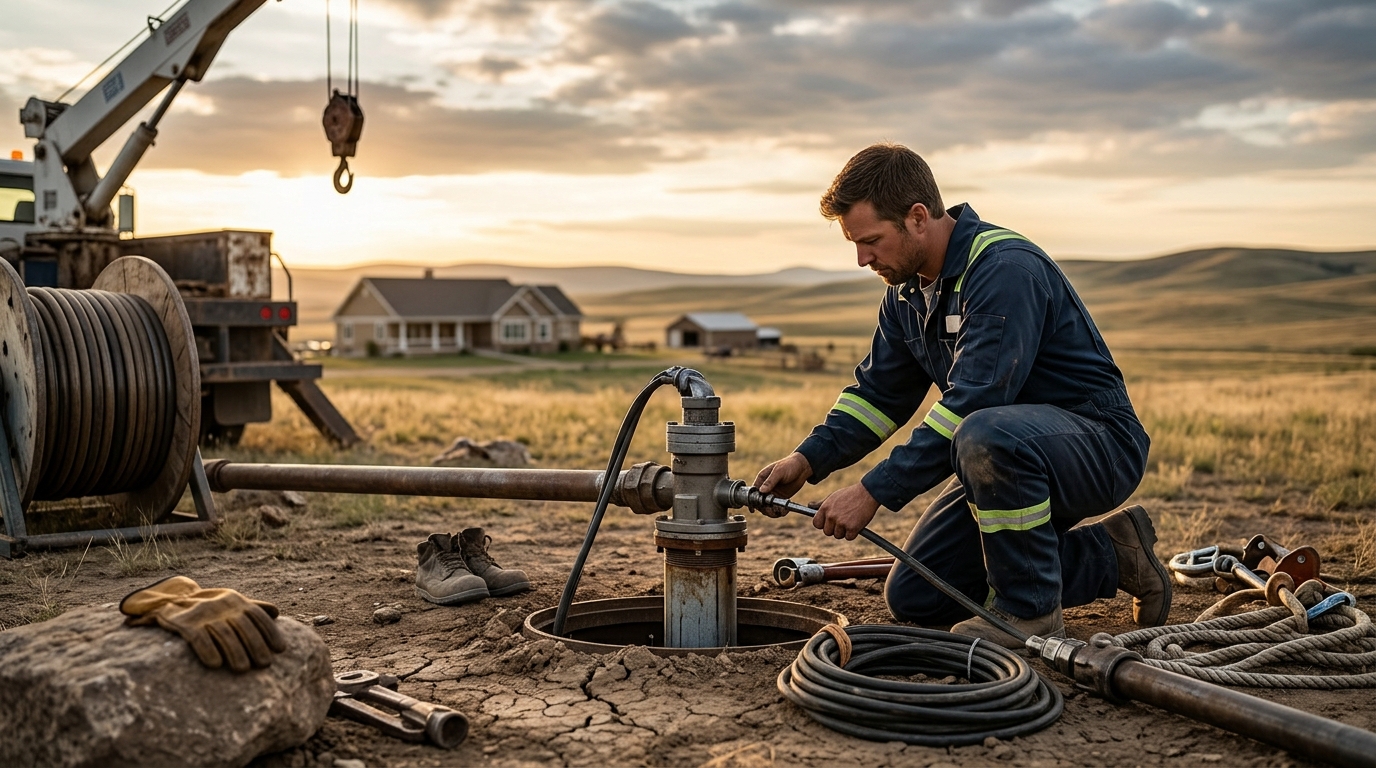
Well depth is a primary driver of emergency pump repair costs because it directly impacts labor time, equipment requirements, and material handling. Deeper wells require more complex extraction processes and specialized tools, which increases the total bill. Understanding these specific depth-related factors helps homeowners and ranchers in Cheyenne and Southeast Wyoming anticipate costs during urgent service calls.
1. Labor Time for Pump Extraction
Deeper wells require significantly more hours to pull and replace the pump assembly. Technicians must carefully lower and raise heavy submersible pumps through narrow well casings. This process is slow and requires precision to avoid damaging the well screen or casing. In emergency scenarios, this extended labor time is billed at premium rates, making depth a major cost component.
2. Specialized Rigging Equipment
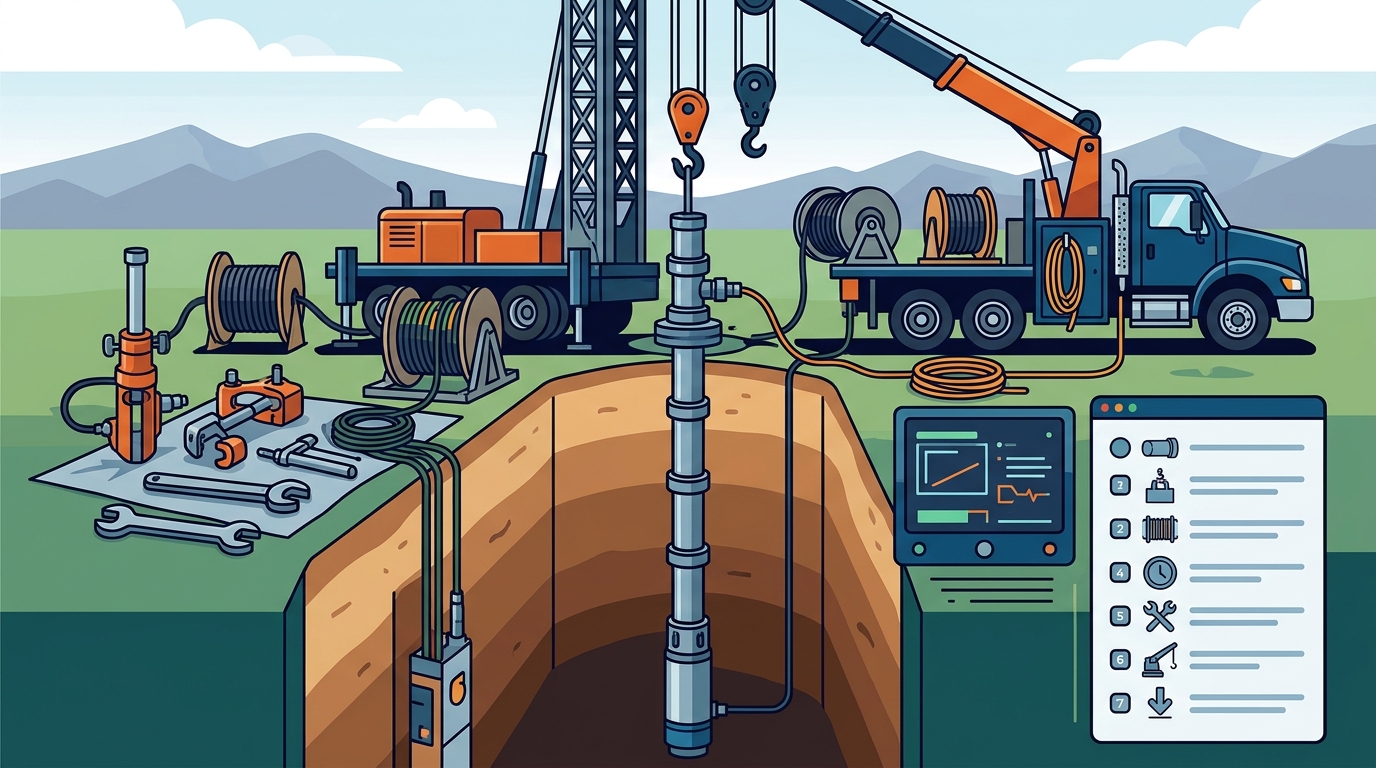
Deep wells often necessitate the use of heavy-duty rigging and winch systems. Standard hand tools are insufficient for pumps located hundreds of feet underground. LG Drilling utilizes specialized service trucks equipped with the necessary lifting capacity to handle deep-set pumps safely. The deployment and operation of this heavy equipment adds to the overall service cost.
3. Cable and Wiring Length
Longer cable runs increase material costs and installation complexity. When replacing a pump in a deep well, new power cables must be spliced or replaced entirely. The cost of submersible-rated cable rises with length, and the labor required to manage and secure these long runs is substantial. This factor is often overlooked in initial estimates but becomes significant in deep wells.
4. Risk of Casing Damage
Greater depth increases the risk of accidental casing damage during repair. Navigating a pump through a long, narrow borehole carries a higher probability of snagging or scraping the well casing. If damage occurs, the repair scope expands to include casing repair or well re-drilling. LG Drilling technicians are trained to mitigate these risks, but the potential for additional work remains a pricing factor.
5. Water Column Weight and Pressure
Deeper water columns exert higher hydrostatic pressure on the pump and seals. This pressure can accelerate wear on mechanical components, leading to more frequent failures. During emergency repairs, technicians must account for this pressure when testing the new pump. Ensuring the system can handle the depth-specific pressure requirements adds to the diagnostic and testing time.
6. Access and Site Logistics
Remote or difficult-to-access sites compound the impact of well depth. In agricultural or rural settings, getting heavy equipment to a deep well site can be challenging. LG Drilling operates in Laramie, Albany, Goshen, and Platte counties, where site access varies. The combination of depth and difficult access requires more planning and equipment mobilization, which is reflected in the final invoice.
7. Permitting and Compliance Documentation
Deep wells may require additional state reporting or compliance checks. The Wyoming State Engineer’s Office has specific regulations for well construction and modification. While emergency repairs often fall under maintenance, significant changes to deep well systems may trigger documentation requirements. LG Drilling handles all State Engineer permitting and statements of completion, ensuring compliance without adding unexpected administrative delays for the client.
Choosing the Right Service Provider
When facing an emergency pump failure in a deep well, choose a provider with proven experience in high-depth systems. LG Drilling has completed more than 900 well systems and resolved over 2,500 service calls across Wyoming. Their team of 14 field technicians is equipped to handle the specific challenges of deep well repairs. For urgent assistance, contact LG Drilling at (307) 996-7110 or visit their service and repair page to learn more about their 24/7 emergency response capabilities.
Frequently Asked Questions
Does well depth affect the cost of a pump replacement?
Yes, well depth is a significant factor in pump replacement costs. Deeper wells require more labor time, specialized equipment, and longer cable runs, all of which increase the total price.
How deep are typical residential wells in Wyoming?
Residential wells in Wyoming vary widely in depth, often ranging from 100 to 500 feet or more. The specific depth depends on local geology and water table levels.
Can LG Drilling handle emergency repairs for deep agricultural wells?
Yes, LG Drilling has extensive experience providing water to range livestock and agricultural operations. They offer 24/7 emergency service for both residential and agricultural wells.
What is the difference between a pump repair and a pump replacement?
A pump repair involves fixing specific components of the existing pump, while a replacement involves removing the old pump and installing a new one. Depth affects the cost of both, but replacement generally costs more due to the new equipment.
Do I need a permit to repair my well pump?
Minor repairs typically do not require a new permit, but significant modifications may. LG Drilling handles all necessary State Engineer permitting and statements of completion for their clients.
How quickly can LG Drilling respond to an emergency call?
LG Drilling responds to calls within 15 minutes and can often resolve problems the same day. Their team is on call 24/7, 365 days a year, ensuring rapid response for water emergencies.